How Loud Is a Gunshot? (140–175 dB Explained)
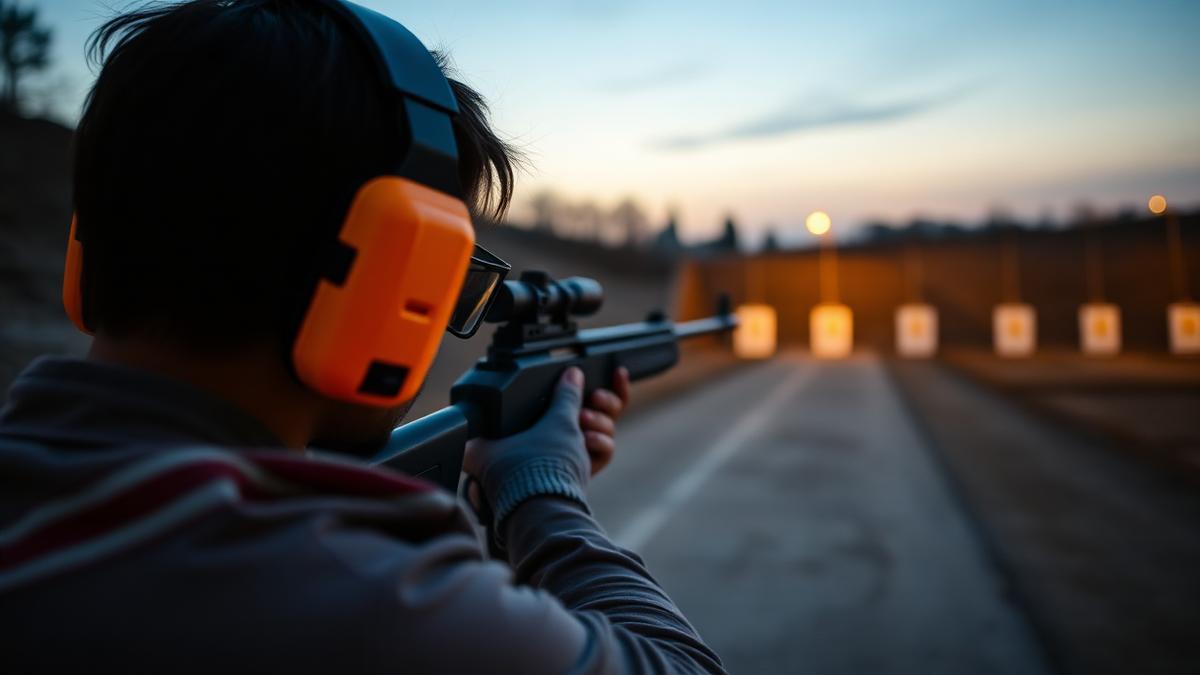
Quick answer
140–175 dB
A gunshot is 140–175 dB at the shooter's ear. Anything above 140 dB can cause permanent hearing loss from a single exposure, which is why hearing protection is required at every range.
140 dB (.22 rifle) to 175 dB (large-bore rifle, muzzle brake)
measured at the shooter's ear
Zero. Hearing damage can occur from a single unprotected shot.
30 dB
60 dB
85 dB
120 dB
How a gunshot compares to other sounds
| Sound source | Decibel level | Relative loudness |
|---|---|---|
| .22 LR rifle | 140 dB | |
| 9mm handgun | 156–160 dB | |
| .223 / AR-15 rifle | 165 dB | |
| 12-gauge shotgun | 150–160 dB | |
| Large-bore rifle with muzzle brake | 170–175 dB | |
| Jet engine at 30 m | 140 dB |
Why gunshots are measured differently from everyday noise
Most everyday sounds — traffic, appliances, conversation — are continuous, so they are measured as an average level over time (LAeq). A gunshot is an impulse noise: the entire event lasts a few milliseconds, and the pressure peak is what damages hearing.
That is why firearm noise is reported as a peak sound pressure level (LZpeak) rather than an A-weighted average. A phone-based decibel meter samples too slowly to capture the true peak of a gunshot, so any app reading you get will substantially under-report it.
Decibel levels by firearm type
Barrel length, caliber, powder load and muzzle devices all change the reading. A muzzle brake redirects gas sideways — great for recoil, terrible for the shooter's ears, often adding 3–5 dB.
Because the decibel scale is logarithmic, a 165 dB rifle is not 'a bit louder' than a 155 dB handgun — it carries roughly ten times the sound energy.
What hearing protection actually does
Foam earplugs typically provide 25–33 dB of noise reduction; earmuffs give 20–31 dB. Doubling up (plugs plus muffs) adds roughly 5 dB over the better of the two — not the sum of both ratings.
Even with double protection, a 165 dB rifle still reaches the ear at around 130 dB. That is why indoor ranges, where sound reflects off hard walls, are considerably more hazardous than outdoor ranges.
- Foam plugs (correctly inserted): ~30 dB reduction
- Over-ear muffs: ~25 dB reduction
- Plugs + muffs combined: ~35 dB reduction
- Suppressor: reduces peak by 20–35 dB, still often above 140 dB
How loud is your own room right now?
Use the free browser-based decibel meter to measure your room in 3 seconds. No app, no signup, and nothing leaves your device.
Start measuringFrequently asked questions
Can one gunshot cause permanent hearing loss?
Yes. Sounds above 140 dB can rupture the delicate hair cells in the inner ear instantly. A single unprotected shot can cause permanent tinnitus or a fixed hearing threshold shift.
Are suppressors 'silent' like in movies?
No. A suppressor typically reduces a gunshot by 20–35 dB, bringing a 165 dB rifle down to about 130–140 dB — quieter, but still at or near the danger threshold. Hearing protection is still recommended.
Can I measure a gunshot with a phone decibel meter?
Not accurately. Phone microphones clip at roughly 100–120 dB and sample too slowly to capture a millisecond impulse peak. Phone meters are reliable for room and environmental noise, not firearms.
Related sound levels
Decibel figures on this page are typical published values and vary with distance, equipment, and environment. Readings from a phone or laptop microphone are estimates, not certified measurements.