How Loud Is an Air Conditioner? (50–75 dB)
Quick answer
50–75 dB
Window and portable air conditioners typically run at about 50–75 dB, while the indoor part of a split system can be far quieter because the compressor sits outside. What you hear at home depends on fan speed, compressor load, distance and what lies between you and the noisy parts.
Low 20s dB (split indoor unit, lowest fan, per specs) to about 75 dB (portable unit, high speed)
about 1 m from the indoor unit or portable/window unit
No hearing risk at typical levels; the concern is sleep and concentration.
30 dB
60 dB
85 dB
120 dB
How an air conditioner compares to other sounds
| Sound source | Decibel level | Relative loudness |
|---|---|---|
| Split system indoor unit, low fan (spec) | ~20–30 dB | |
| Split system indoor unit, high fan | ~38–45 dB | |
| Window unit | ~50–60 dB | |
| Portable unit | ~50–75 dB | |
| Outdoor condenser at 1 m | ~55–70 dB | |
| Ceiling fan | ~30–45 dB |
Indoor and outdoor parts sound very different
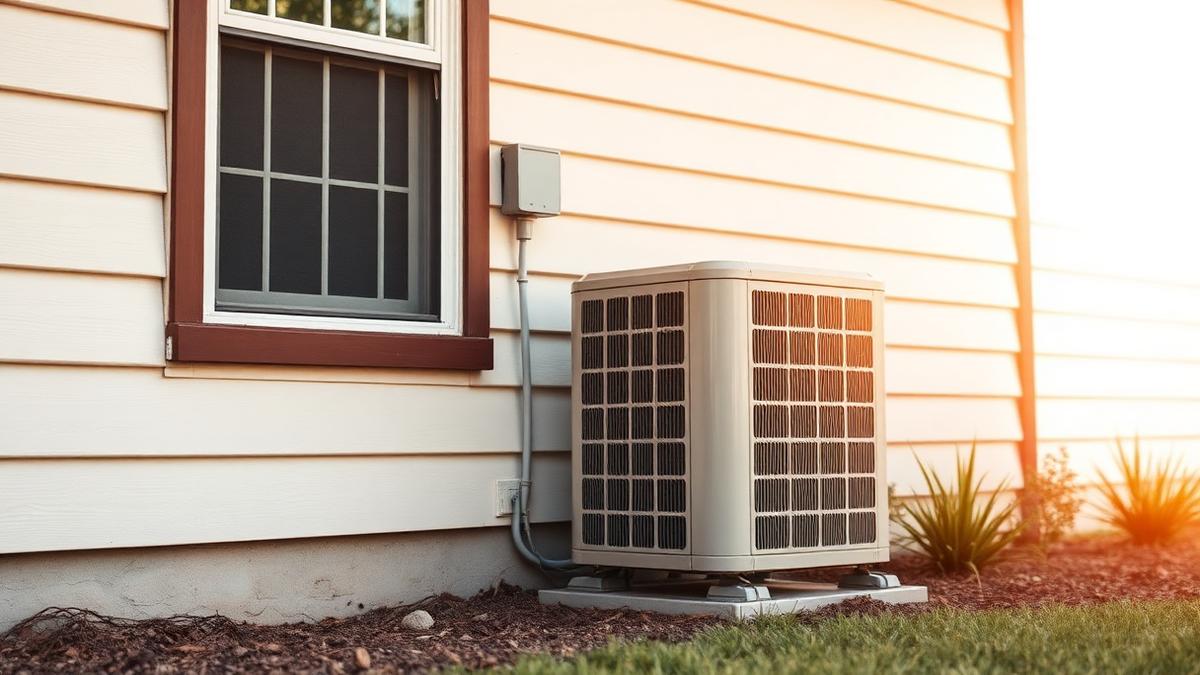
An air conditioner has two main noise sources: the fans that move air and the compressor that pumps refrigerant. In a split system the compressor and its fan sit in the outdoor unit, so the room mainly hears the indoor fan. Window and portable units put everything in one box inside or in the window, which is why they are usually much louder in the room.
The outdoor unit still matters. It can be clearly audible through an open window or to neighbours, and its low-frequency hum travels further than fan hiss.
Fan speed and compressor load
Fan noise rises steeply with speed, so the difference between lowest and highest fan setting can be large. Inverter compressors speed up and slow down with demand: on a hot afternoon or just after switching on, the unit works hard and is loudest, then settles to a quieter level.
Fixed-speed units cycle on and off instead, producing a start-up surge and a noticeable change in sound each time — which some people find more disruptive at night than a steady hum.
Distance, walls and windows
Moving away from a portable unit lowers the level, but indoors reflections from walls and ceilings limit the benefit. A closed door between you and the unit usually helps more than a few extra metres in the same room.
Window and through-wall installations are weak points: gaps around a window kit can let both machine noise and outdoor traffic noise into the room. Sealing those gaps reduces both.
Continuous background sound and sleep
Steady AC sound raises the background level of the room. Some people find that this masks sudden noises such as traffic or barking; others find the hum itself disturbs their sleep. Masking does not reduce the total noise, so it is a trade-off rather than a fix.
For reference, WHO's 1999 Guidelines for Community Noise give 30 dB LAeq as a guideline value inside bedrooms, and its 2009 Night Noise Guidelines recommend 40 dB Lnight measured outside the home. A unit running in the 50s in a bedroom is well above those reference values.
Specifications versus what you measure
Manufacturer figures may be sound pressure measured at a defined distance in a test room, or sound power, which is a different quantity; outdoor units in particular are often given as sound power. Neither will match a reading taken at your bed or desk.
To compare settings in your own home, measure from the same spot with the same device, once with the unit off and once with it running at each fan speed. SnapRoomScore readings are uncalibrated estimates, so they are most useful for these relative comparisons rather than for checking a spec sheet.
How loud is your own room right now?
Use the free browser-based decibel meter to estimate your room's noise level in seconds. Audio is processed in your browser; readings are uncalibrated estimates that vary by device.
Start measuringFrequently asked questions
How many decibels is a quiet air conditioner?
For indoor units, specifications in the 20s or low 30s dB on the lowest fan setting are considered quiet. Check whether a figure is sound pressure or sound power before comparing models.
Is 55 dB loud for an air conditioner?
For a living room it may be acceptable; for a bedroom it is loud. It is well above WHO's 30 dB LAeq guideline value for bedrooms, so many people would notice it while trying to sleep.
Does AC noise help you sleep?
It depends on the person. Steady sound can mask sudden noises, but it also adds to the total noise in the room. If you rely on it, a lower fan speed or a quieter unit is usually a better compromise.
Related sound levels
Sources
Exposure times follow NIOSH's occupational recommended exposure limit (85 dBA over 8 hours, 3 dB exchange rate). They are guidelines for limiting risk, not thresholds at which injury is certain.
Decibel figures on this page are typical published values and vary with distance, equipment, and environment. Readings from a phone or laptop microphone are estimates, not certified measurements.