Acceptable Decibel Levels for Sleeping (Under 30 dB)
Last updated: June 13, 2026
Reviewed by acoustic research sources and WHO guidelines.
Your bedroom might be louder than you think. Even seemingly quiet rooms can have noise levels that interfere with sleep quality. Understanding what noise level is appropriate for good sleep is the first step toward better rest.
In this article, we explore the recommended bedroom noise levels, the science behind how noise affects sleep, and practical ways to measure and reduce sound in your sleeping environment.
Table of Contents
- What Is the Ideal Noise Level for Sleeping?
- WHO Noise Guidelines for Bedrooms
- How Noise Affects Your Sleep
- Common Bedroom Noise Sources
- How to Measure Bedroom Noise
- Tips to Reduce Bedroom Noise
- FAQ
Curious how noisy your bedroom really is? [Measure your room noise level instantly with SnapRoomScore](/). No installation required.
What Is the Ideal Noise Level for Sleeping?
A bedroom should ideally have a noise level below 30 dB for restful, uninterrupted sleep. This is roughly the volume of a whisper or the quiet hum of a rural area at night. Anything above 40 dB increases the risk of sleep disturbances.
The decibel scale is logarithmic, which means that a 10 dB increase represents a sound that is roughly twice as loud to the human ear. So the difference between 30 dB and 40 dB is significant.
Understanding Decibel Levels in Context
To help you understand what different noise levels feel like, here is a quick reference:
| Noise Level | Example | Sleep Impact |
|---|---|---|
| 20 dB | Rustling leaves | Ideal for sleep |
| 30 dB | Quiet whisper | Good for sleep |
| 40 dB | Quiet library | May cause light disturbances |
| 50 dB | Moderate rainfall | Likely to disrupt sleep |
| 60 dB | Normal conversation | Will disrupt sleep |
WHO Noise Guidelines for Bedrooms
The World Health Organization (WHO) has established clear guidelines for nighttime noise. According to their research, continuous noise above 30 dB can begin to affect sleep quality. Noise events above 45 dB (such as a car horn or a door slamming) can cause full awakenings.
The WHO recommends:
- Continuous background noise should stay below 30 dB during sleep
- Individual noise events should not exceed 45 dB
- Long-term nighttime exposure above 40 dB is associated with adverse health effects
These guidelines apply to noise measured inside the bedroom. If you live near a busy road, the noise levels inside your home may be much higher than you realize.
Health Risks of Chronic Nighttime Noise
Long-term exposure to nighttime noise above recommended levels has been linked to:
- Increased risk of cardiovascular disease
- Higher blood pressure
- Elevated stress hormones
- Impaired cognitive function during the day
- Weakened immune system
How Noise Affects Your Sleep
Noise disrupts sleep in ways you may not notice. Even sounds that do not fully wake you can shift you from deep sleep (stages 3 and 4) to lighter sleep stages. This reduces the restorative quality of your rest.
The Sleep Cycle and Noise
Your sleep follows a cycle of approximately 90 minutes, alternating between light sleep, deep sleep, and REM (dream) sleep. Deep sleep is essential for physical recovery and immune function, while REM sleep supports memory consolidation and emotional regulation.
Noise can:
- Prevent you from falling asleep – Even moderate noise delays the onset of sleep
- Fragment your sleep cycles – Sounds above 33 dB can shift you to lighter sleep
- Reduce REM sleep – Irregular noise patterns are especially disruptive to dream sleep
- Cause micro-awakenings – Brief awakenings you may not remember but that affect sleep quality
Not sure if your bedroom is quiet enough? [Use SnapRoomScore to measure it now](/) – it takes just a few seconds.
Common Bedroom Noise Sources
Many people are surprised by how many noise sources exist in their bedroom. Here are the most common:
- Traffic noise from roads, highways, or airports
- HVAC systems including air conditioning units and furnace fans
- Appliances such as refrigerators, washing machines, or dishwashers in adjacent rooms
- Electronic devices like chargers that buzz, or clocks that tick
- Neighbors through thin walls or shared floors
- Snoring from a partner
- Pets moving around at night
Identifying Your Noise Sources
The best way to identify bedroom noise sources is to measure your room at different times. Use SnapRoomScore to take readings during the day and at night. Compare the results to see when noise levels are highest.
How to Measure Bedroom Noise
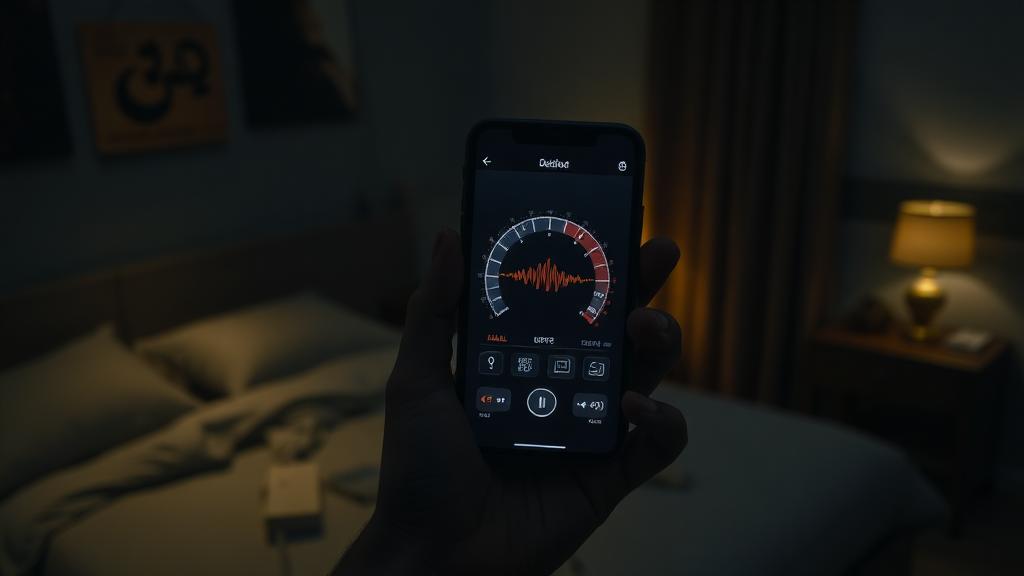
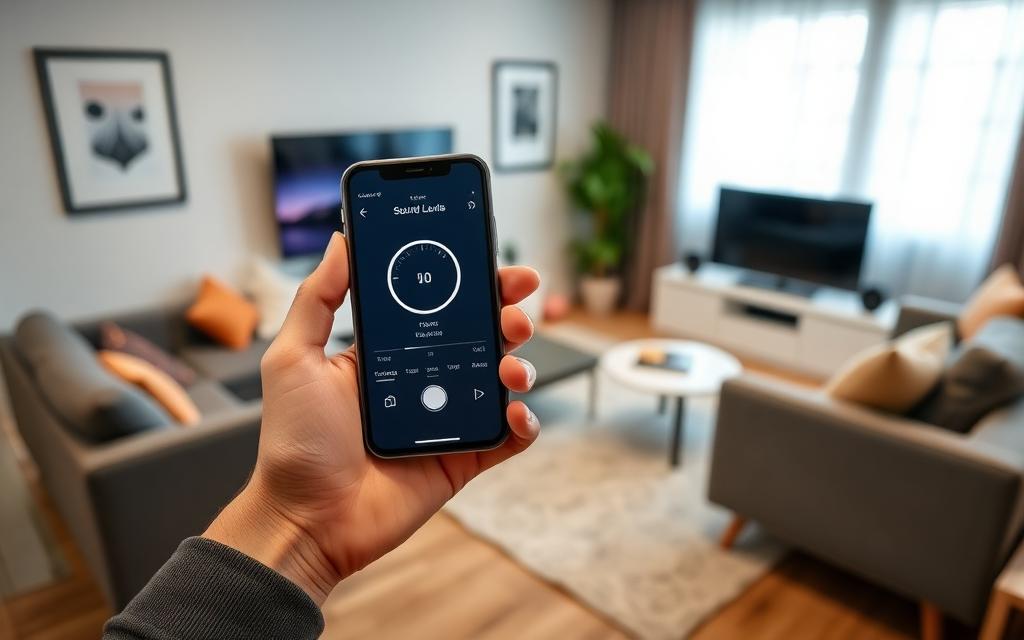
Measuring your bedroom noise level is simple with modern tools. You do not need expensive equipment – your phone or computer microphone can provide a useful estimate.
Step-by-Step Guide
- Open SnapRoomScore in your browser
- Allow microphone access when prompted
- Place your device on your nightstand or bed
- Click "Start Measuring" and let it run for at least 60 seconds
- Note the average, peak, and minimum decibel levels
For the most accurate results:
- Measure at the time you normally go to sleep
- Keep the room in its typical nighttime state (windows open or closed as usual)
- Take measurements on multiple nights to identify patterns
If you want to learn more about measuring techniques, check out our guide on how to measure noise in a room using your phone.
Tips to Reduce Bedroom Noise
If your bedroom noise level exceeds 30 dB, here are practical steps to bring it down:
Quick Fixes
- Use earplugs – Foam earplugs can reduce noise by 20–30 dB
- Try a white noise machine – Constant background noise masks disruptive sounds
- Close windows and doors – This alone can reduce noise by 10–15 dB
Medium-Term Solutions
- Install heavy curtains – Acoustic or blackout curtains absorb sound and block light
- Add a rug or carpet – Soft floor coverings reduce sound reflection
- Seal gaps around windows and doors with weather stripping
Long-Term Investments
- Upgrade to double-glazed windows – Significantly reduces traffic and street noise
- Add acoustic panels – Especially useful for walls shared with neighbors
- Relocate your bed – Moving away from exterior walls or noisy neighbors can help
For a comprehensive list of noise reduction strategies, read our article on 8 ways to reduce noise in a room.
Ready to improve your sleep? Start by [measuring your bedroom noise with SnapRoomScore](/). It's free, instant, and works right in your browser.
For a wider view of how indoor sound shapes comfort, sleep and focus, read our complete guide to room noise, echo and acoustic quality — it covers the full picture beyond just bedroom dB targets.
FAQ
What is the ideal noise level for sleeping?
The World Health Organization recommends that bedroom noise should stay below 30 dB for uninterrupted, restorative sleep. Levels above 40 dB can cause frequent awakenings.
Can noise affect sleep even if it doesn't wake you up?
Yes. Noise as low as 33 dB can shift you from deep sleep to lighter sleep stages, reducing the restorative quality of your rest without fully waking you.
How can I measure noise in my bedroom?
You can use a browser-based tool like SnapRoomScore to measure the decibel level in your bedroom using your device microphone. No installation required.