The Complete Guide to Room Noise, Echo, and Acoustic Quality
Last updated: May 22, 2026
Reviewed by acoustic research sources and WHO guidelines.
Your room has a sound personality. Whether it feels calm and focused or chaotic and stressful depends largely on two things: how much noise enters the space and how that sound behaves once it is inside. Most people notice when a room is "too loud" — but few understand why some rooms feel uncomfortable even when they are quiet.
This guide covers everything you need to know about room noise, echo, reverberation, and acoustic quality. By the end, you will understand how sound works indoors, what makes a room sound good or bad, and practical steps to improve any space — from a bedroom to a home office.
Table of Contents
- Why Room Sound Matters More Than You Think
- Noise vs Sound Quality: Understanding the Difference
- What Is Room Noise?
- What Is Echo and Reverberation?
- How Sound Behaves Indoors
- Ideal Noise Levels by Room Type
- How to Measure Your Room
- Common Room Acoustic Problems
- How to Improve Room Sound Quality
- Real-World Examples: Before and After
- Conclusion and Next Steps
- FAQ
Want to know your room's acoustic profile right now? [Measure your room noise level instantly with SnapRoomScore](/) — free, private, no installation needed.
Why Room Sound Matters More Than You Think
We spend over 90% of our lives indoors. The acoustic quality of those indoor spaces affects our sleep, concentration, stress levels, and even our physical health — yet most people never think about room sound until it becomes a problem.
Research from the World Health Organization shows that chronic noise exposure contributes to cardiovascular disease, cognitive impairment, and sleep disorders. But it is not just about loud noise. Poor acoustic quality — rooms with excessive echo, uneven sound distribution, or persistent low-level hum — creates a subtle but constant drain on well-being.
The Hidden Cost of Bad Room Sound
Consider these effects:
- Sleep disruption: Bedroom noise above 30 dB reduces deep sleep quality, even without waking you
- Productivity loss: Office noise above 50 dB reduces cognitive performance by up to 66%
- Stress response: Persistent background noise elevates cortisol levels, contributing to chronic stress
- Communication difficulty: Rooms with excessive echo make conversation tiring and frustrating
- Fatigue: Your brain works harder to filter noise in acoustically poor rooms, leading to mental exhaustion
The good news is that understanding room acoustics gives you the tools to fix these problems — often with simple, affordable changes.
Noise vs Sound Quality: Understanding the Difference
Before we dive deeper, it is important to distinguish between two related but different concepts:
Noise refers to unwanted sound. This includes traffic passing outside your window, an HVAC system humming, a neighbor's music, or appliances running. Noise is measured in decibels (dB) and the goal is usually to reduce it.
Sound quality (or acoustic quality) refers to how sound behaves within a room. A room can be quiet but still sound bad — for example, a bare, empty room with 25 dB of noise might have terrible echo that makes it uncomfortable to speak in. Conversely, a moderately noisy café at 55 dB can feel pleasant because the sound is well-distributed and absorbed.
Improving your room's sound environment means addressing both: reducing unwanted noise AND improving how the remaining sound behaves in the space.
What Is Room Noise?
Room noise is the total sound level inside a room at any given time. It comes from two sources:
External Noise Sources
- Traffic: Cars, trucks, motorcycles, and buses — especially problematic for rooms facing busy roads
- Construction: Temporary but often intense and disruptive
- Aircraft: Particularly affecting homes near flight paths
- Neighbors: Music, conversations, footsteps in apartments and townhouses
- Nature: Wind, rain, birds — usually pleasant but can be loud
Internal Noise Sources
- HVAC systems: Air conditioning, heating, and ventilation are the most common indoor noise sources
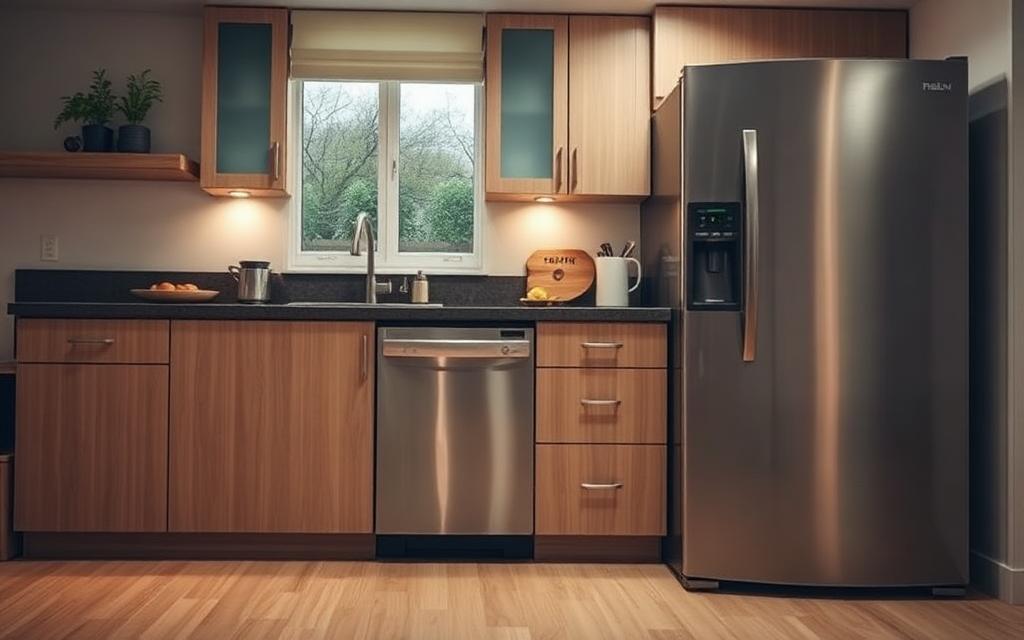
- Appliances: Refrigerators, dishwashers, washing machines, and dryers
- Electronics: Computer fans, chargers that buzz, clocks that tick
- Plumbing: Water pipes, especially in older buildings
- People: Conversation, movement, and activities in adjacent rooms
For a detailed breakdown of what constitutes normal indoor noise, read our guide on what is a normal noise level inside a home.
Background Noise: The Invisible Baseline
Every room has a background noise level — the persistent sound that remains when no obvious source is active. This background noise is often 30–45 dB in residential settings and 40–55 dB in commercial spaces. Most people are not consciously aware of it, but it fundamentally shapes how a room feels.
A room with high background noise feels tiring. A room with very low background noise (below 25 dB) can feel uncomfortably silent, making every small sound jarring. The ideal is a controlled, consistent background level appropriate for the room's purpose.
What Is Echo and Reverberation?
Echo and reverberation are both caused by sound reflecting off surfaces — but they are not the same thing.
Echo
Echo occurs when a sound wave bounces off a distant surface and returns to the listener as a distinct, delayed repetition. For an echo to be perceived as separate from the original sound, the reflecting surface must be at least 17 meters away (sound takes about 100 milliseconds to travel this distance and back).
In most residential rooms, true echo is rare because walls are too close together. What people commonly call "echo" in a room is actually reverberation.
Reverberation
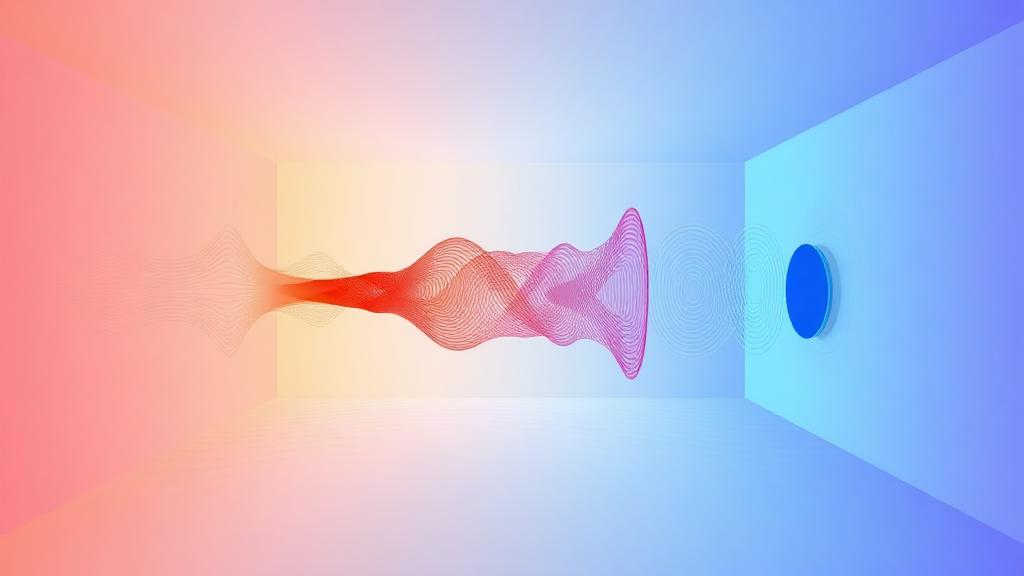
Reverberation is what happens when sound reflects off multiple surfaces in rapid succession, creating a wash of overlapping reflections. Instead of hearing a distinct repeat, you hear the sound "lingering" or "ringing" in the room. This is the effect that makes an empty room feel hollow and a tiled bathroom sound bright and lively.
Why Empty Rooms Feel Uncomfortable
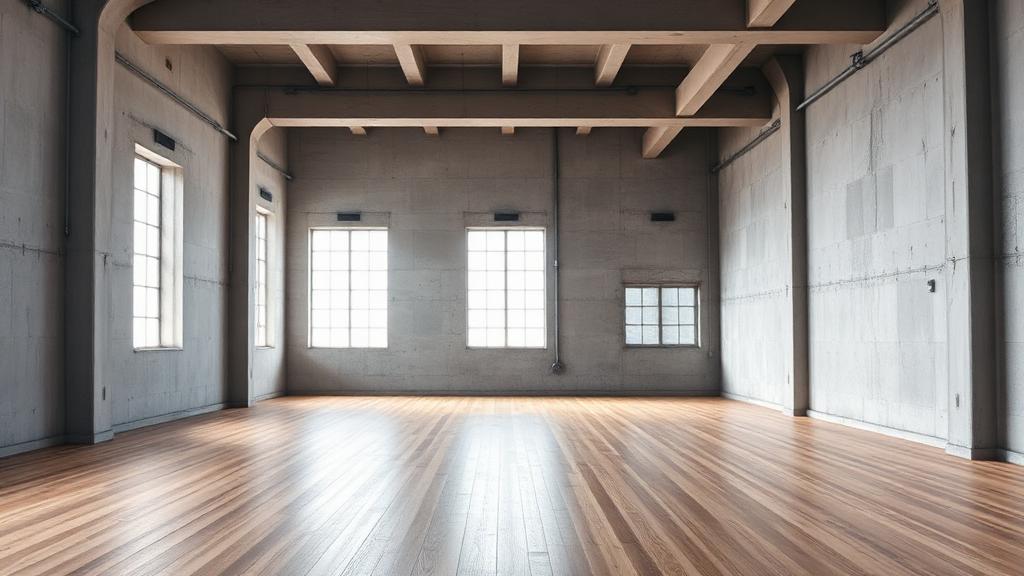
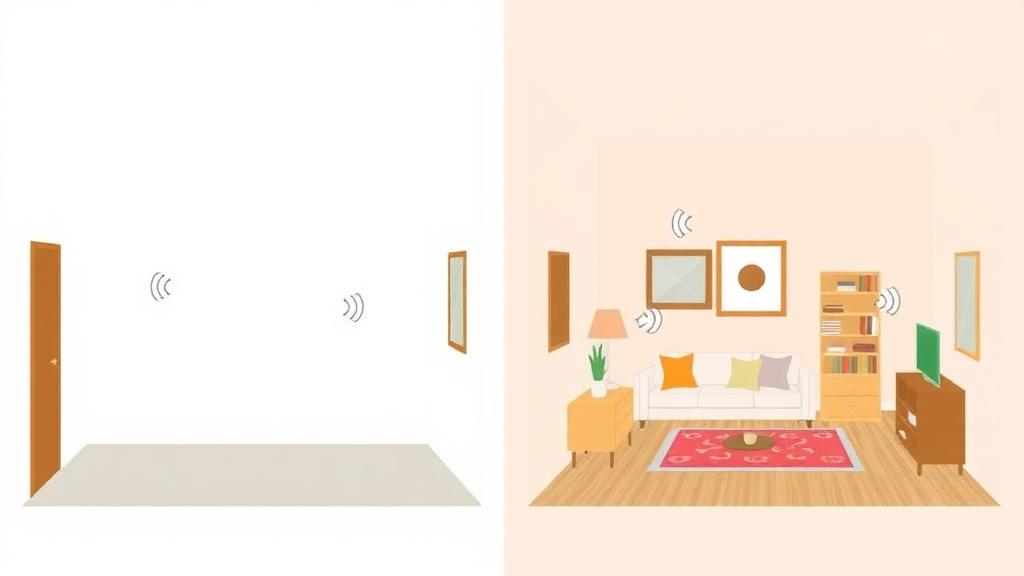
Have you ever walked into a completely empty apartment and felt something was off? That discomfort is reverberation. Without furniture, rugs, or curtains to absorb sound, every footstep, word, and door close bounces between hard walls and floors repeatedly. The reverberation time (how long sound lingers) in an empty room can be 2–4 seconds — compared to 0.4–0.8 seconds in a well-furnished room.
This excessive reverberation:
- Makes speech harder to understand
- Creates a sense of coldness and emptiness
- Amplifies even small sounds
- Causes auditory fatigue from constantly overlapping reflections
Reverberation Time (RT60)
Acousticians measure reverberation using RT60 — the time it takes for a sound to decay by 60 decibels after the source stops. Ideal RT60 values depend on the room's purpose:
| Room Type | Ideal RT60 | Notes |
|---|---|---|
| Bedroom | 0.3–0.5s | Short RT60 for calm, restful atmosphere |
| Living room | 0.4–0.8s | Moderate for balanced conversation |
| Home office | 0.3–0.5s | Short for speech clarity |
| Kitchen | 0.5–0.8s | Often higher due to hard surfaces |
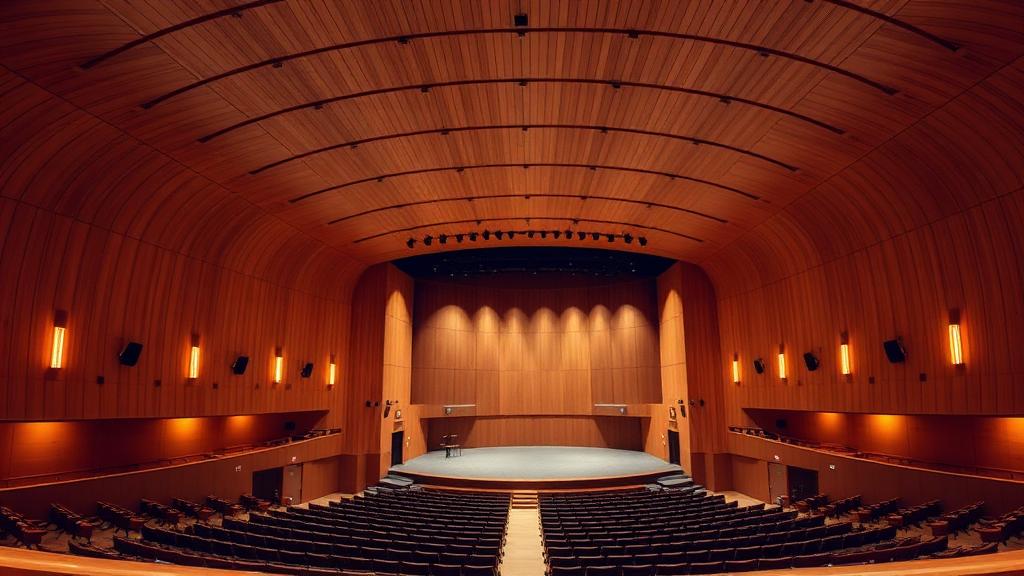
| Concert hall | 1.5–2.5s | Long for musical richness |
| Recording studio | 0.2–0.4s | Very short for precise monitoring |
How Sound Behaves Indoors
Understanding three fundamental principles explains almost everything about room acoustics:
1. Reflection
When sound waves hit a hard, flat surface — like a bare wall, glass window, or tile floor — they bounce back, similar to how a ball bounces off a wall. This is reflection. Parallel walls create the worst reflections because sound bounces back and forth between them repeatedly (called "flutter echo").
Key principle: Hard, flat surfaces increase reflection. The more reflective surfaces in a room, the more reverberant and "echoey" it sounds.
2. Absorption
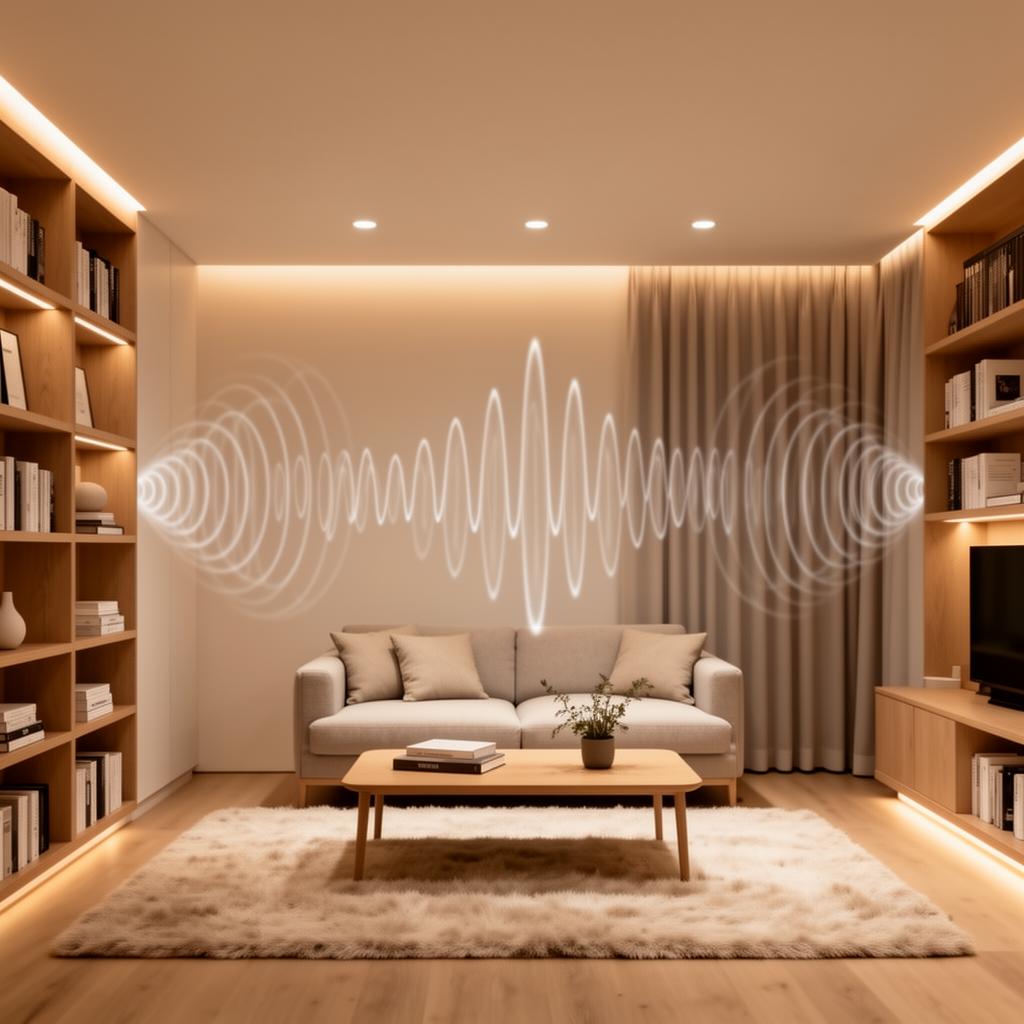
Soft, porous materials absorb sound energy. When a sound wave hits a curtain, upholstered sofa, bookshelf full of books, or a thick rug, the material converts some of the sound energy into tiny amounts of heat. The sound that reflects back is weaker.
Key principle: Soft, textured surfaces reduce reflections and reverberation. This is why furnished rooms sound completely different from empty ones.
3. Diffusion
Diffusion scatters sound waves in multiple directions rather than reflecting them in a single direction. Irregular surfaces — bookshelves with varying depths, textured wall art, exposed brick, or furniture of different sizes and shapes — act as natural diffusers.
Key principle: Varied, irregular surfaces create a more natural, pleasant sound environment. Diffusion does not remove sound; it distributes it evenly.
The best-sounding rooms use a combination of all three: some reflection (for liveliness), controlled absorption (to reduce excessive reverberation), and diffusion (for even, natural sound distribution).
Curious how your room measures up? [Test your room noise level with SnapRoomScore](/) — it takes just a few seconds.
Ideal Noise Levels by Room Type
Different rooms serve different purposes, and each has an optimal noise range. Here is a comprehensive guide:
Bedroom: Below 30 dB
Your bedroom should be the quietest room in your home. The World Health Organization recommends continuous noise below 30 dB for healthy sleep. Even noise that does not fully wake you can shift your sleep from deep, restorative stages to lighter sleep — degrading sleep quality without you realizing it.
Common bedroom issues: Traffic noise through windows, HVAC systems running at night, partner snoring, and electronics on standby.
For a deep dive into bedroom acoustics, read our guide on ideal bedroom noise levels for sleep.
If the room sounds hollow rather than loud, compare how empty and furnished rooms sound — bare surfaces alone can add several perceived decibels.
Home Office: Below 45 dB
Concentration requires acoustic control. Research consistently shows that cognitive performance — particularly tasks involving reading, writing, and problem-solving — declines sharply above 50 dB. An ideal home office sits between 35–45 dB with minimal sudden noise events.
Common office issues: HVAC noise, street noise, household members, and equipment fans.
Learn more about how noise affects your work in our article on how noise affects productivity.
Living Room: Below 50 dB
Living rooms serve multiple purposes — conversation, relaxation, entertainment — so they benefit from moderate, controlled sound. A range of 35–50 dB allows comfortable conversation without raising voices.
Common living room issues: TV or music too loud, open floor plans that carry kitchen noise, and windows facing busy streets.
Kitchen: Below 55 dB
Kitchens are inherently noisy due to appliances, hard surfaces (tile, stone countertops, glass), and cooking activities. The hard surfaces also create significant reflection and reverberation. Target below 55 dB during active cooking and below 45 dB when idle.
Bathroom: Below 50 dB
Bathrooms have the most reflective surfaces in a typical home — tile walls, tile floors, glass shower doors, and porcelain fixtures. This makes them naturally reverberant. While some echo in a bathroom is expected, excessive reverberation can be tamed with towels, bath mats, and fabric shower curtains.
Summary Table
| Room | Ideal dB Range | Priority |
|---|---|---|
| Bedroom | 20–30 dB | Sleep quality |
| Home office | 35–45 dB | Focus and productivity |
| Living room | 35–50 dB | Conversation comfort |
| Kitchen | 40–55 dB | Cooking activities |
| Bathroom | 35–50 dB | Comfort |
How to Measure Your Room
You do not need expensive professional equipment to understand your room's acoustic profile. Modern devices with built-in microphones can give you practical, useful measurements.
Quick Measurement with SnapRoomScore
- Open SnapRoomScore in your browser on any device
- Allow microphone access when prompted
- Place your device on a stable surface at ear height
- Click "Start Measuring" and stay still for at least 60 seconds
- Note the average, peak, and minimum decibel readings
When to Measure
For the most useful picture of your room's acoustic environment:
- Morning: Measure baseline when the house is quiet
- Daytime: Capture traffic, appliance, and activity noise
- Evening: Assess the room during typical use
- Night: Measure before sleep to check bedroom suitability
What to Look For
- Average dB: Your room's typical noise level — compare against the room-type guidelines above
- Peak dB: Identifies sudden noise events (doors, traffic, appliances starting)
- Variation: Large swings between min and max indicate inconsistent acoustic environment
- Pattern: Does noise increase at certain times? This helps identify sources
For a detailed walkthrough, see our step-by-step guide on how to measure noise in a room using your phone.
For details on understanding your readings, check our decibel chart with common noise levels.
Common Room Acoustic Problems
Most indoor acoustic problems fall into a few categories. Identifying which ones affect your room helps you choose the right solutions.
Problem 1: Too Much Echo / Reverberation
Symptoms: Sound lingers after the source stops. Conversation feels tiring. Clapping produces a noticeable ring. The room feels "hollow."
Cause: Too many hard, flat surfaces (bare walls, hard floors, large glass windows) and not enough soft, absorptive materials.
Most affected rooms: Empty rooms, rooms with minimalist decor, large open spaces, and kitchens.
Problem 2: Excessive Background Noise
Symptoms: A constant hum, buzz, or drone that you may not consciously notice but that causes fatigue. Difficulty hearing quiet sounds. Need to raise your voice slightly during conversation.
Cause: HVAC systems, traffic noise, appliance noise, or neighbor noise penetrating through walls and windows.
Most affected rooms: Rooms facing busy roads, apartments with shared walls, rooms near mechanical equipment.
Problem 3: Flutter Echo
Symptoms: A rapid, buzzing repetition when you clap between two parallel walls. A metallic or ringing quality to sharp sounds.
Cause: Sound bouncing rapidly back and forth between two parallel, hard surfaces — typically opposing walls in a narrow hallway or small room.
Solution: Break up at least one of the parallel surfaces with furniture, shelving, artwork, or acoustic treatment.
Problem 4: Uneven Sound Distribution
Symptoms: Some areas of the room are noticeably louder or quieter. Music sounds different depending on where you stand. "Dead spots" and "hot spots."
Cause: Room geometry creating standing waves (particularly at low frequencies), or sound being focused by concave surfaces.
Most affected rooms: Rooms with unusual shapes, rooms with cathedral ceilings, or long narrow rooms.
Problem 5: Sound Leakage Between Rooms
Symptoms: Conversations, TV audio, or music clearly audible in adjacent rooms. Lack of privacy.
Cause: Thin walls, gaps under doors, shared HVAC ducts, or inadequate insulation. Sound travels through the weakest point — even a small gap can transmit significant noise.
How to Improve Room Sound Quality
Good news: most acoustic improvements are practical, affordable, and often improve the room visually too. Here are strategies organized from simplest to most involved.
Level 1: Free — Rearrange What You Have
- Move bookshelves to bare walls: A bookshelf full of differently-sized books is one of the best natural sound diffusers
- Reposition furniture: Break up large open spaces and avoid having empty gaps between parallel walls
- Close doors: Simply closing interior doors reduces noise transfer by 10–15 dB
- Open closets: In a pinch, an open closet full of clothes acts as a significant sound absorber
Level 2: Low Cost — Add Soft Materials
- Hang heavy curtains: Even on walls without windows, thick fabric curtains absorb mid and high-frequency reflections effectively
- Add area rugs: A large rug on a hard floor can reduce reverberation time by 20–30%
- Use throw pillows and blankets: Every soft surface helps
- Place a doormat: Reduces sound at entry points
- Hang textile art: Woven wall hangings, tapestries, or macramé act as acoustic absorbers
Level 3: Medium Investment — Targeted Solutions
- Weatherstrip windows and doors: Sealing air gaps blocks surprisingly high amounts of external noise. Learn about sealing techniques for noise reduction
- Add door sweeps: A 1-centimeter gap under a door can transmit as much noise as a half-open window
- Install thick roller blinds: Combined with curtains, they create an effective sound barrier at windows
- Use acoustic underlayment: If replacing flooring, acoustic underlay reduces impact noise transmission
Level 4: Significant Investment — Acoustic Treatment
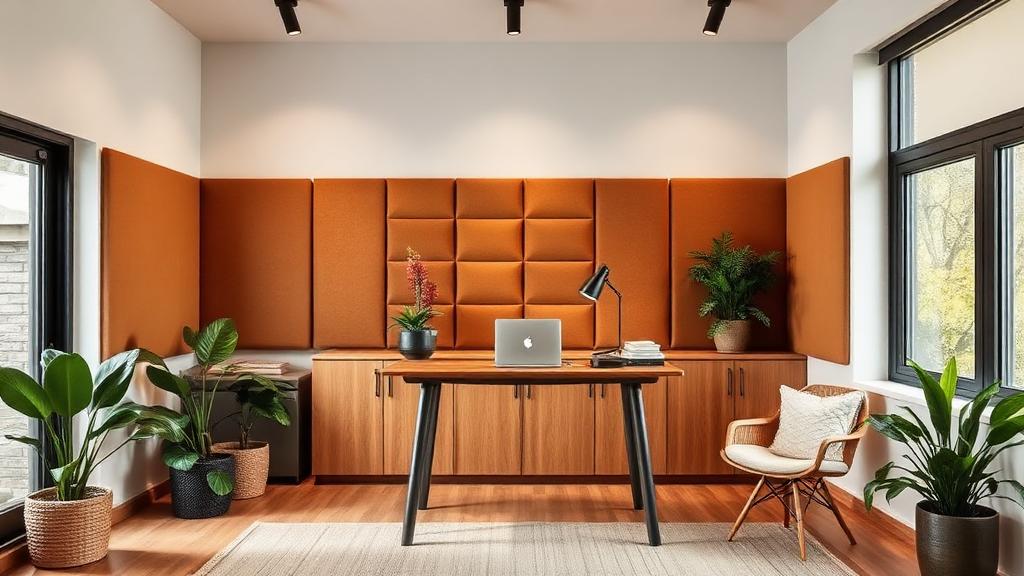
- Acoustic panels: Fabric-wrapped foam or fiberglass panels mounted on walls absorb reflections effectively. Focus on first reflection points — the spots where sound from your primary listening or speaking position first hits a wall
- Bass traps: Foam or fiberglass wedges placed in room corners absorb low-frequency buildup
- Double glazing: Upgrading to double or triple-glazed windows dramatically reduces external noise — often by 25–35 dB
- Ceiling treatments: Acoustic ceiling tiles or cloud panels address vertical reflections
For a comprehensive list of noise reduction techniques, see our detailed article on 8 ways to reduce noise in a room.
Ready to hear the difference? [Measure your room before and after changes with SnapRoomScore](/) to see exactly how much you improved.
Real-World Examples: Before and After
Example 1: The Echo-Heavy Bedroom
Before: A bedroom with hardwood floors, bare white walls, and minimal furniture measured 28 dB background noise but felt cold and echoey. Clapping produced a noticeable ring lasting over 1 second. Sleep quality was poor despite the low noise level.
Changes: Added a large area rug (covering 60% of the floor), hung heavy blackout curtains, placed a filled bookshelf on one wall, and added upholstered headboard.
After: Background noise remained at 28 dB, but the room felt dramatically warmer and quieter. Clap test showed reverb dropping to about 0.4 seconds. Sleep quality improved noticeably.
Key insight: Noise level did not change — acoustic quality did. This is why measuring decibels alone does not tell the full story.
Example 2: The Noisy Home Office
Before: A home office facing a busy street measured 52 dB with windows closed. Concentration was difficult, and video calls required repeating sentences frequently.
Changes: Installed weatherstripping around the window frame, added a thick roller blind behind existing curtains, placed a bookshelf on the wall opposite the window, and added a large rug.
After: Noise dropped to 41 dB — an 11 dB reduction that represents a roughly 50% decrease in perceived loudness. Video call quality improved dramatically. Focus sessions lengthened from 20 minutes to over an hour.
Example 3: The Open-Plan Living Room
Before: An open-plan living/kitchen area measured 48 dB during cooking. Sound from the kitchen (hard tile, stone counters) carried throughout the entire space, making conversation difficult.
Changes: Added a large fabric sofa as a room divider, placed plants along the kitchen boundary, hung a textile wall hanging on the largest bare wall, and added thick curtain panels between zones.
After: Living area noise during kitchen activity dropped to 39 dB. The zones felt more separated and conversation became comfortable again.
The 30-Second Clap Test: Measure Reverb Without Equipment
Before spending money on acoustic panels, run this free self-test. Stand in the middle of the room, clap once sharply, and listen. If the sound dies almost instantly, your RT60 is likely under 0.4 seconds — already excellent. If you hear a clear "tail" lasting roughly one second or longer, you have reverberation worth addressing.
For a slightly more rigorous version, record the clap with your phone's voice memo app and zoom into the waveform. Count how long the visible signal takes to drop to a flat line. The result is a rough RT60 estimate — accurate enough to compare a room before and after you add a rug or curtain. Combine it with a 60-second SnapRoomScore reading to capture both the steady noise floor (in dB) and the decay character (the clap tail) in under two minutes.
This two-metric approach matters because, as Example 1 above demonstrated, a 28 dB room can still feel uncomfortable if its decay time is long. dB alone is necessary but not sufficient — pair it with a clap test for the full acoustic picture.
Frequency Matters: Why Bass Noise Feels Worse
Two rooms reading the same average decibel level can feel completely different depending on the frequency content of the noise. Low-frequency sound — the rumble of HVAC compressors, distant traffic, bass from a neighbor's speaker — travels further, penetrates walls more easily, and is harder to absorb with everyday materials.
A practical consequence: soft furnishings (curtains, rugs, upholstered sofas) primarily absorb mid and high frequencies (500 Hz and above). They do almost nothing for sub-100 Hz rumble. If your room measures 42 dB but feels heavy or oppressive, the problem is usually bass-dominated noise that demands different treatment: bass traps in room corners, sealing duct gaps, or isolating the noise source mechanically. For everyday concentration noise (chatter, keyboards, light traffic) the soft-furnishing playbook works beautifully.
This is also why headphones feel like such an upgrade in noisy environments — well-designed over-ear models attenuate exactly the mid-band speech frequencies that distract the brain most, even when raw dB levels are unchanged. For more on this effect, see our deep dive on how noise affects productivity.
When to Stop Measuring and Start Fixing
A common trap is to keep measuring without acting. Three readings are enough to make a decision: one at the noisiest realistic time (rush hour, evening cooking), one at the quietest (early morning, late night), and one during typical use. If the typical reading exceeds the room-type guideline by more than 5 dB, or if the clap test reveals a tail longer than 0.8 seconds, start with Level 1 and Level 2 fixes from the previous section. Re-measure after each change.
You will be surprised how often a single rug, one bookshelf relocation, or weatherstripping a door delivers the biggest single jump. Acoustic improvement is rarely about expensive treatment — it is about removing the worst offender first, then re-measuring.
Conclusion and Next Steps
Room acoustics is not just for recording studios and concert halls. Every room you spend time in has acoustic characteristics that affect your comfort, productivity, sleep, and health. Understanding the basics — noise sources, reflection, absorption, and reverberation — empowers you to make simple changes with significant impact.
Your Action Plan
- Measure your room using SnapRoomScore to establish your baseline
- Identify problems: Is it too noisy? Too echoey? Both?
- Start with free solutions: Rearrange furniture, close doors, position bookshelves
- Add soft materials: Rugs, curtains, and textiles make an immediate difference
- Seal gaps: Weatherstripping and door sweeps block external noise cheaply
- Consider targeted treatment: Acoustic panels and double glazing for persistent issues
Test Your Room Now
The best way to start is to know where you stand. Open SnapRoomScore and measure your room right now — it takes less than a minute and gives you an instant Room Quietness Score.
Understanding your room's sound personality is the first step to making it better.
[Measure Your Room Now →](/) — Free, instant, works in any browser.
FAQ
What is the difference between noise and echo?
Noise refers to unwanted sound from sources like traffic, appliances, or HVAC systems. Echo is the reflection of sound off hard surfaces, causing you to hear the same sound repeated. Both affect room comfort, but they require different solutions.
What is a good noise level for a room?
It depends on the room's purpose. Bedrooms should be below 30 dB for sleep, offices below 45 dB for concentration, and living rooms below 50 dB for comfort. Use SnapRoomScore to measure your room instantly.
What is the difference between echo, reverberation and noise?
Echo occurs when sound reflects off hard, flat surfaces like bare walls, hardwood floors, and glass windows. Rooms with minimal furniture and no soft materials are especially prone to echo. Adding rugs, curtains, and soft furnishings reduces echo significantly.
How can I improve room acoustics without spending a lot?
Start with what you have: add bookshelves filled with books, hang heavy curtains, place rugs on hard floors, and arrange furniture to break up flat wall surfaces. These everyday items absorb and scatter sound effectively.
What is reverberation time?
Reverberation time (RT60) measures how long it takes for sound to decay by 60 dB after the source stops. A typical living room has an RT60 of 0.4–0.8 seconds. Longer reverberation makes speech harder to understand and rooms feel uncomfortable.
Can I measure room acoustics with my phone?
Yes. Browser-based tools like SnapRoomScore use your device microphone to measure noise levels in real time. While not as precise as professional equipment, they provide useful readings for everyday awareness and room comparison.