Empty Room vs Furnished Room — Sound Differences Explained
Last updated: May 22, 2026
Reviewed by acoustic research sources and WHO guidelines.
Everyone who has moved into an empty apartment knows the feeling: your voice echoes, footsteps ring, and the space feels uncomfortably harsh. Then you move your furniture in, and suddenly the room feels warm and comfortable.
This is not just a feeling — it is measurable physics. Let us look at exactly what changes when you furnish a room, why it matters, and what to prioritize if you want the biggest acoustic improvement.
Table of Contents
- The Empty Room Problem
- How Furniture Changes Sound
- Before and After: Real Numbers
- Which Items Make the Biggest Difference
- The Diminishing Returns Curve
- Priority Order for Acoustic Improvement
- FAQ
Curious how your room sounds right now? [Measure it with SnapRoomScore](/) — takes just a few seconds.
The Empty Room Problem
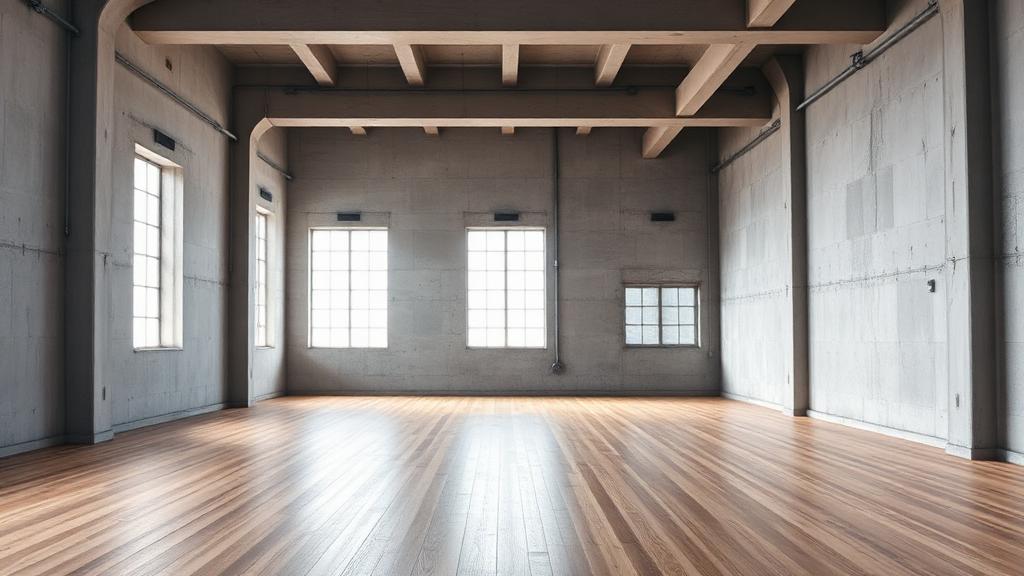
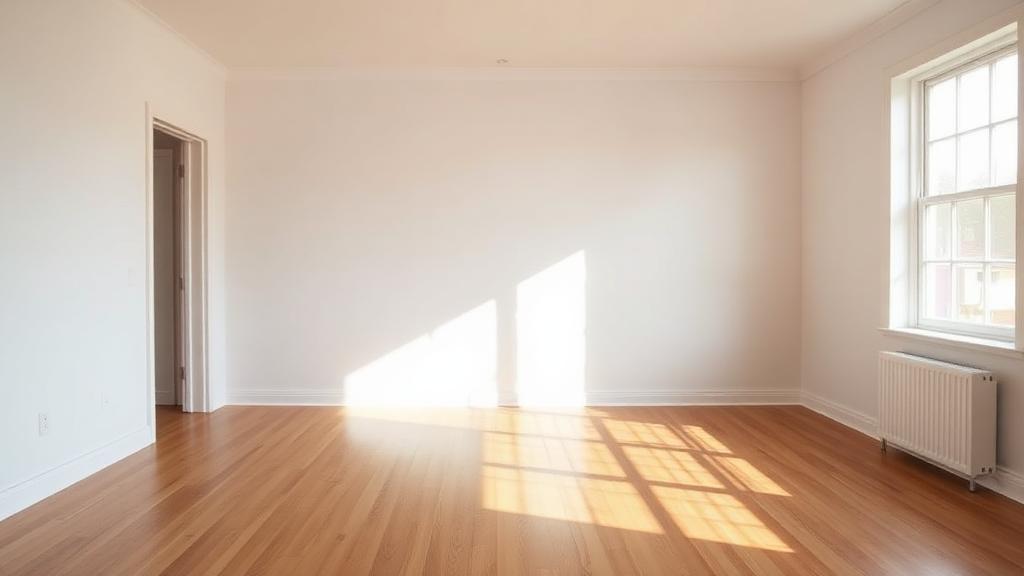
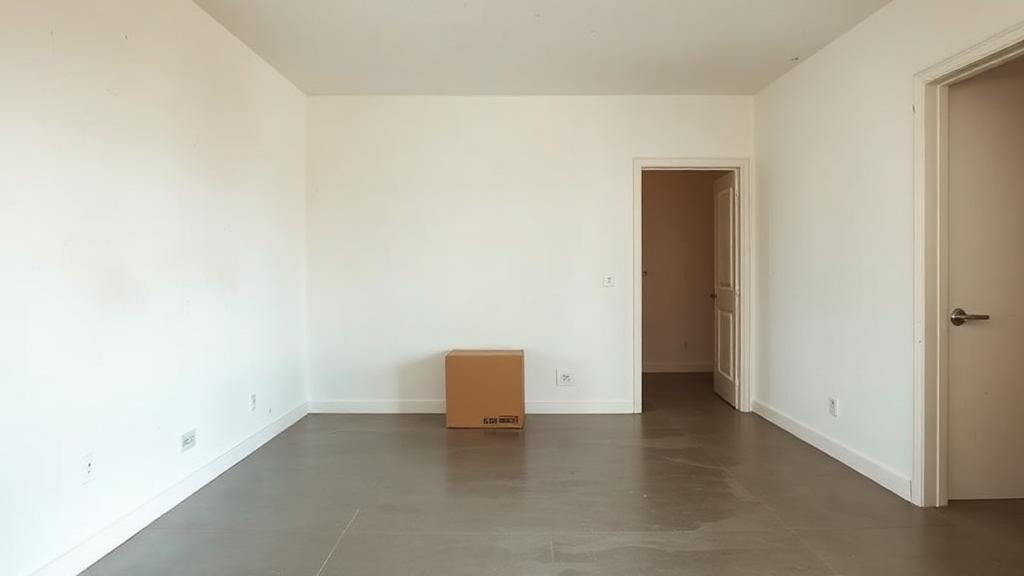
An empty room is an acoustic nightmare. Every surface — walls, floor, ceiling, windows — is hard and reflective. When you make a sound, the energy has nowhere to go except to bounce back and forth between surfaces.
In a typical empty room:
- Reverberation time (RT60): 1.5–4.0 seconds (vs 0.3–0.7 for a furnished room)
- Background noise level: 3–8 dB higher due to accumulated reflections
- Speech intelligibility: poor — words blur into each other
- Comfort level: low — the space feels cold and institutional
The physics is simple: sound energy is conserved until it is absorbed. Hard surfaces absorb only 2–5% of sound energy per reflection. Soft, porous materials absorb 30–80% per reflection. More absorptive material means faster sound decay.
For a deeper understanding of reverberation, see our guide on RT60 reverberation time.
How Furniture Changes Sound
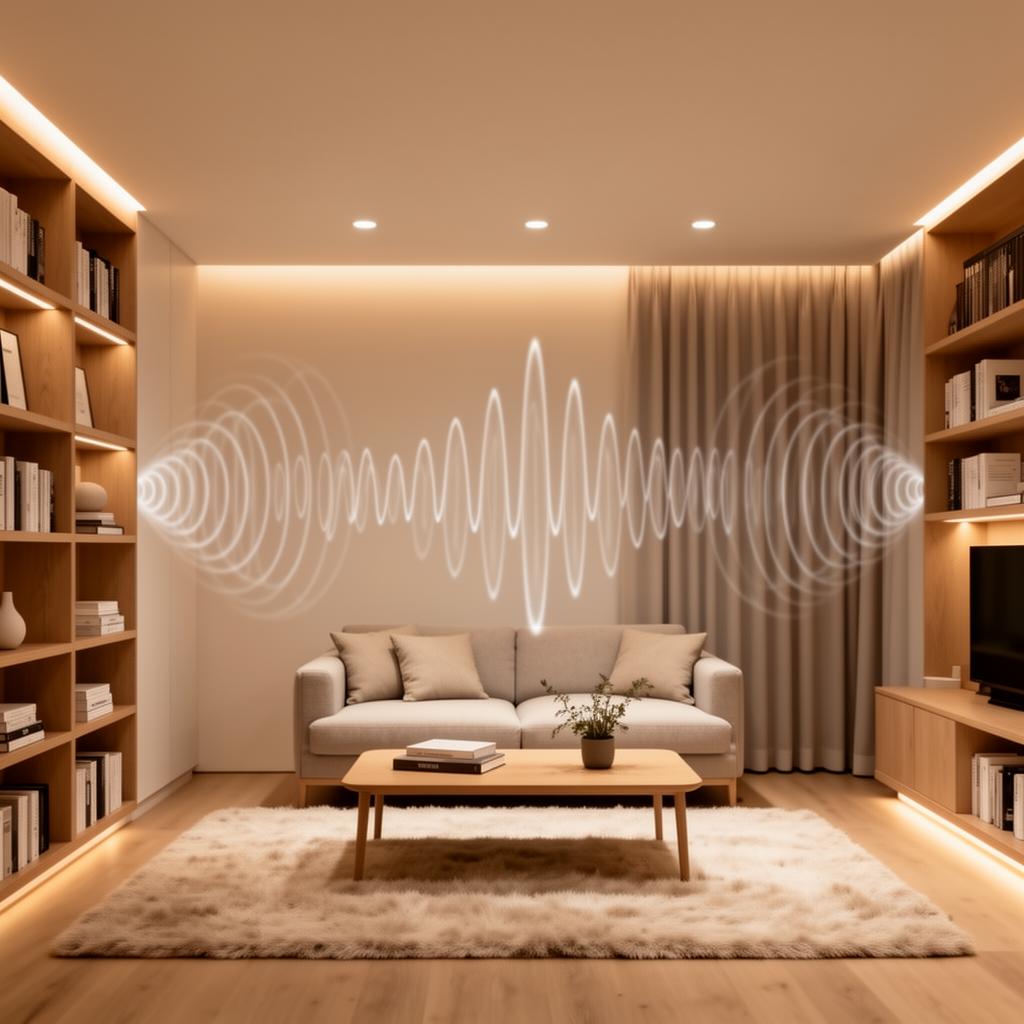
Furniture transforms room acoustics through three mechanisms:
1. Absorption
Soft, porous materials convert sound energy into tiny amounts of heat. Every cushion, rug, curtain, and upholstered surface absorbs sound that would otherwise keep bouncing.
2. Diffusion
Irregular surfaces scatter sound in many directions instead of allowing clean reflections. Bookshelves, mixed-height furniture, and decorative objects all diffuse sound.
3. Mass and Damping
Heavy furniture adds mass to the room, which reduces vibration of walls and floors. A heavy bookshelf against a thin wall can measurably reduce sound transmission.
Before and After: Real Numbers
Here is what typically changes when you furnish a standard 20 m² room with hard floors:
| Metric | Empty Room | Furnished Room | Change |
|---|---|---|---|
| RT60 | 1.8–2.5s | 0.4–0.7s | 65–75% reduction |
| Background noise | 38–42 dB | 32–36 dB | 4–8 dB lower |
| Speech clarity (STI) | 0.45 (fair) | 0.70 (good) | Major improvement |
| Flutter echo | Present | Absent | Eliminated |
| Perceived comfort | Low | High | Dramatic change |
The most dramatic improvement happens with the first few items. Going from completely empty to partially furnished creates a bigger acoustic change than going from partially to fully furnished.
Which Items Make the Biggest Difference
Not all furniture is equal acoustically. Here is the impact ranking:
Tier 1: Highest Impact
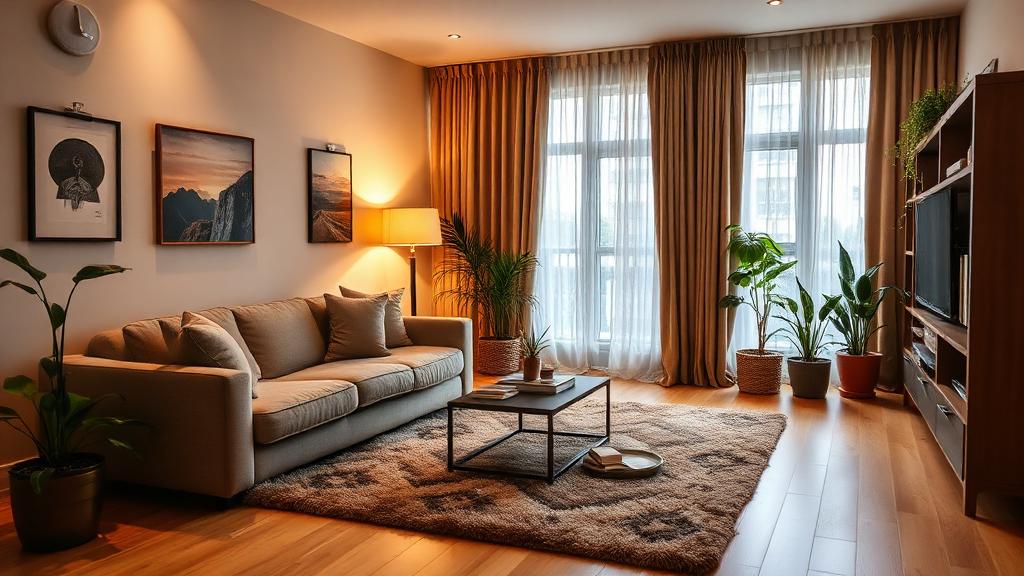
- Large area rug (covers 50%+ of hard floor) — reduces reverberation by 20–30%
- Upholstered sofa — large surface area of absorptive material
- Heavy floor-to-ceiling curtains — cover large reflective window surfaces
Tier 2: Significant Impact
- Upholstered armchairs — additional soft absorption
- Filled bookshelves — excellent diffusion + absorption
- Bed with soft headboard and bedding — significant absorption in bedrooms
Tier 3: Moderate Impact
- Cushions and throw pillows — incremental absorption
- Wall art and tapestries — reduces bare wall reflections
- Plants — provide minor diffusion (more aesthetic than acoustic)
Tier 4: Minimal Impact
- Hard furniture (glass tables, metal chairs) — adds diffusion but little absorption
- Small decorative items — negligible acoustic effect
- Thin curtains — minimal absorption at most frequencies
See the difference for yourself. [Measure your room before and after changes with SnapRoomScore](/) — free and instant.
The Diminishing Returns Curve
Acoustic absorption follows a curve of diminishing returns. The first 20% of added absorption material creates about 50% of the total improvement. Each additional piece adds less than the last.
This is important because it means:
- You do not need to over-treat — a few key pieces do most of the work
- Strategic placement matters more than quantity — one rug on a hard floor beats ten cushions on a sofa
- You can over-absorb — too much soft material makes a room feel dead and oppressive
The goal is not to eliminate all reverberation — that creates its own problems. Aim for RT60 between 0.3–0.7 seconds for home rooms. Learn more about finding the balance in our guide on what makes a room sound good or bad.
Priority Order for Acoustic Improvement
If you are furnishing a room and want to maximize acoustic comfort, add items in this order:
- Large area rug — biggest single improvement for hard floors
- Sofa or upholstered seating — significant absorption surface
- Heavy curtains — treat the windows (major reflective surfaces)
- Bookshelf with books — diffusion + absorption against bare wall
- Bed/bedding (bedrooms) — natural absorption
- Additional soft items — armchairs, cushions, throws
After step 3, most rooms will sound comfortable. Steps 4–6 provide refinement.
For rooms that still need improvement after furnishing, see our guide on improving acoustics without expensive panels.

Furnishing is only half the picture. If the room still sounds harsh after adding soft surfaces, read why rooms echo and how to fix it and how to improve room acoustics without panels. For the complete picture, see our guide to room noise, echo and acoustic quality, or check what a normal home noise level is to see whether loudness or reverberation is your real problem.
FAQ
Why do empty rooms echo so much?
Empty rooms echo because there is nothing to absorb sound energy. Sound waves bounce off hard walls, floors, and ceilings many times before dying out, creating noticeable reverberation that can last 2–4 seconds.
What furniture reduces echo the most?
Upholstered sofas and armchairs provide the most absorption per item. Large area rugs on hard floors are the single most impactful addition. Bookshelves filled with books provide excellent diffusion and absorption.
How much does furniture reduce noise?
Furnishing a room typically reduces reverberation time by 50–75% and can lower perceived ambient noise by 3–8 dB. The biggest improvements come from the first few large, soft items added.