What Is Reverberation Time (RT60) — Explained Simply
Last updated: March 17, 2026
Reviewed by acoustic research sources and WHO guidelines.
When you walk into a cathedral, you notice how sound lingers and swells. In a recording studio, sounds stop almost immediately. The difference is reverberation time — specifically, a measurement called RT60. Understanding this concept helps you evaluate and improve the acoustic quality of any room.
Table of Contents
- What Is RT60?
- How RT60 Is Measured
- Ideal RT60 Values by Room Type
- What Affects Reverberation Time?
- Too Much vs Too Little Reverberation
- How to Estimate Your Room's RT60
- Reducing Reverberation Time
- FAQ
Curious about your room's acoustics? [Measure your room's noise level with SnapRoomScore](/) as a first step toward understanding your space.
What Is RT60?
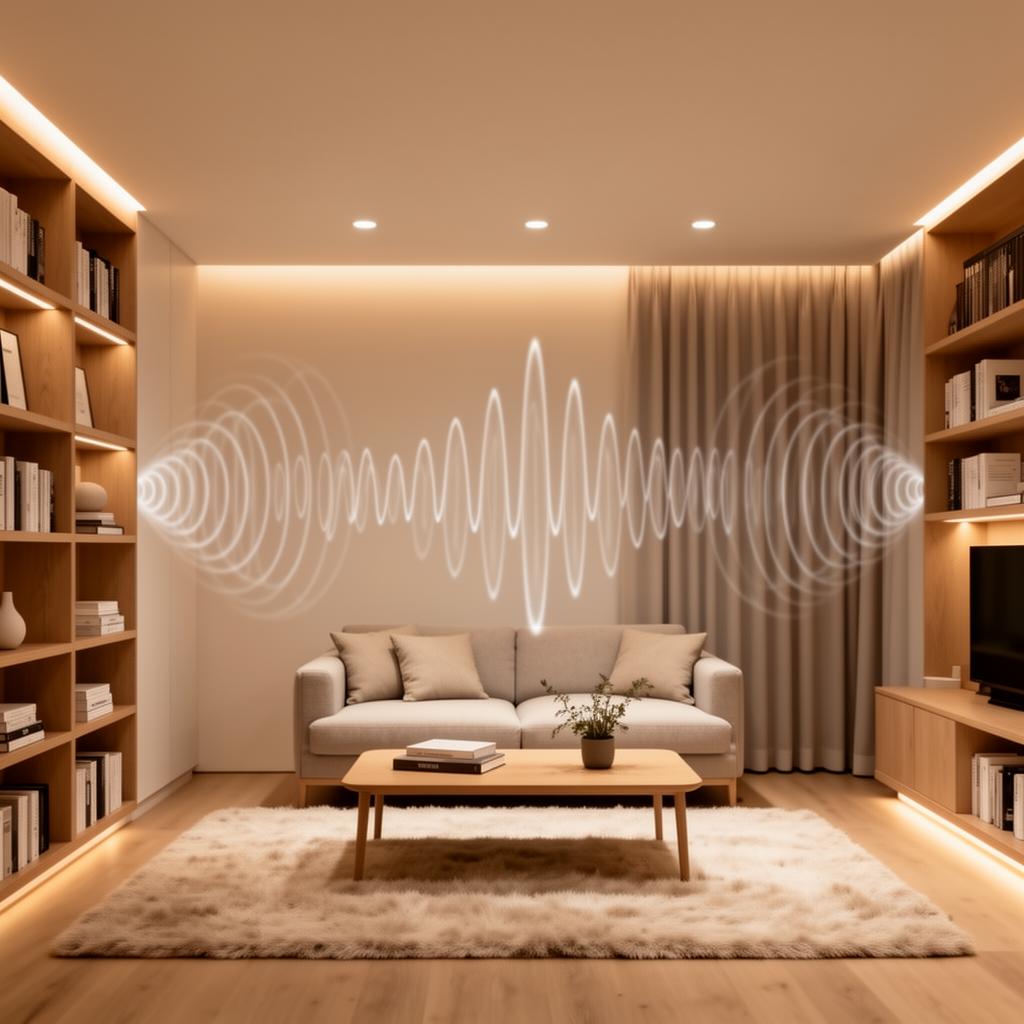
RT60 stands for Reverberation Time 60. It is the time (in seconds) it takes for sound in a room to decay by 60 decibels after the source stops. In other words, it measures how long sound "rings" or "lingers" in a space.
A short RT60 (under 0.5 seconds) means sound dies quickly — the room feels "dead" or "dry." A long RT60 (over 1.5 seconds) means sound persists — the room feels "live," echoey, or boomy.
The concept was developed by Wallace Clement Sabine at Harvard University in the 1890s. He discovered that reverberation time depends on three factors:
- Room volume — larger rooms have longer RT60
- Surface area — more surface means more reflection opportunities
- Absorption — soft materials reduce RT60
His formula, known as the Sabine equation, is still used today:
RT60 = 0.161 × V / A
Where V is room volume in cubic meters and A is total absorption in sabins.
How RT60 Is Measured
Professional Method
- Generate a loud impulse sound (balloon pop, starter pistol, or electronic sweep)
- Record the sound decay with a calibrated microphone
- Analyze the decay curve to find the time for a 60 dB reduction
Because achieving a full 60 dB decay can be difficult in noisy environments, professionals often measure RT20 or RT30 (decay of 20 or 30 dB) and extrapolate to RT60.
DIY Estimation
You can get a rough estimate using a simple clap test:
- Stand in the center of your room
- Clap once, loudly
- Count how long the sound lingers
- If it rings for more than half a second, your RT60 is likely above 0.6s
For reference, measure your room's baseline noise level with SnapRoomScore to understand your room's acoustic starting point.
Ideal RT60 Values by Room Type
Different spaces need different reverberation times. Here are the generally accepted optimal values:
| Room Type | Ideal RT60 | Why |
|---|---|---|
| Recording studio | 0.2–0.4s | Clean, dry sound for accurate recording |
| Bedroom | 0.3–0.5s | Calm, comfortable atmosphere for sleep |
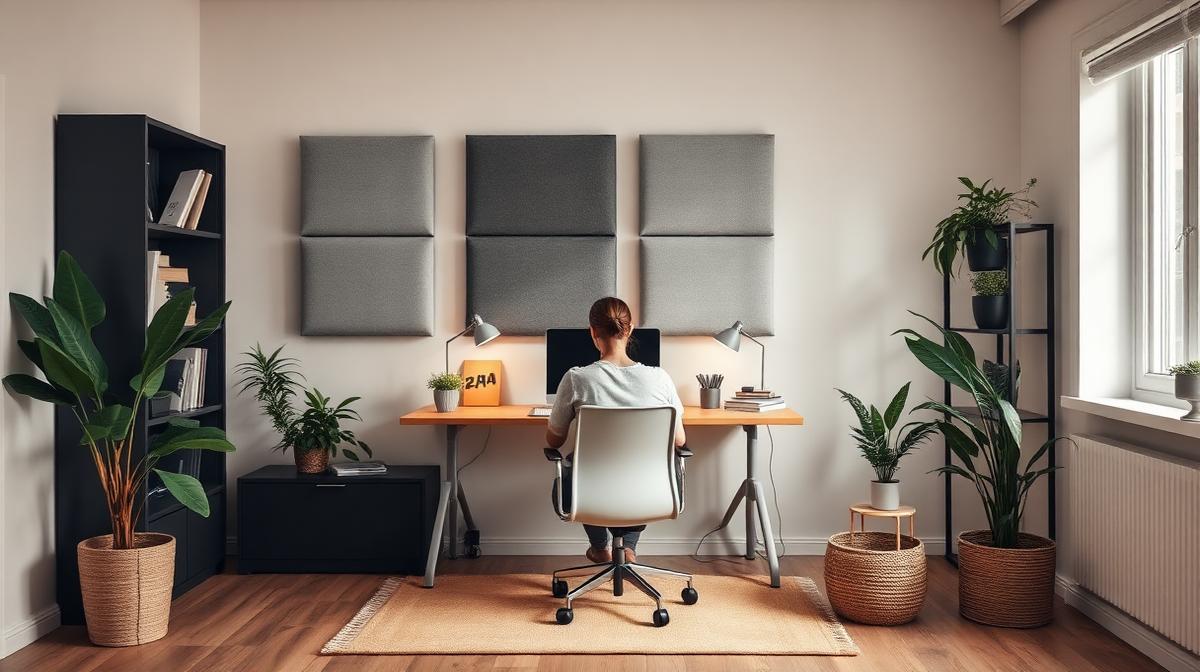
| Home office | 0.3–0.5s | Clear speech for video calls and focus |
| Living room | 0.4–0.6s | Natural feel, good for conversation and TV |
| Classroom | 0.4–0.7s | Speech intelligibility for students |
| Conference room | 0.5–0.8s | Clear communication for groups |
| Concert hall | 1.5–2.5s | Rich, full sound for orchestral music |
| Cathedral | 3.0–8.0s | Grand, immersive atmosphere |
A bedroom with an RT60 of 1.5 seconds would feel uncomfortably echoey, while a concert hall with an RT60 of 0.3 seconds would sound flat and lifeless. Context determines whether reverberation is desirable or problematic.
For more on ideal noise levels in specific rooms, see our guide on normal home noise levels and bedroom noise for sleep.
What Affects Reverberation Time?
Room Volume
Larger rooms have longer reverberation because sound waves travel farther between surfaces. Doubling the room volume roughly doubles the RT60 (all else being equal).
Surface Materials
This is the factor you have the most control over:
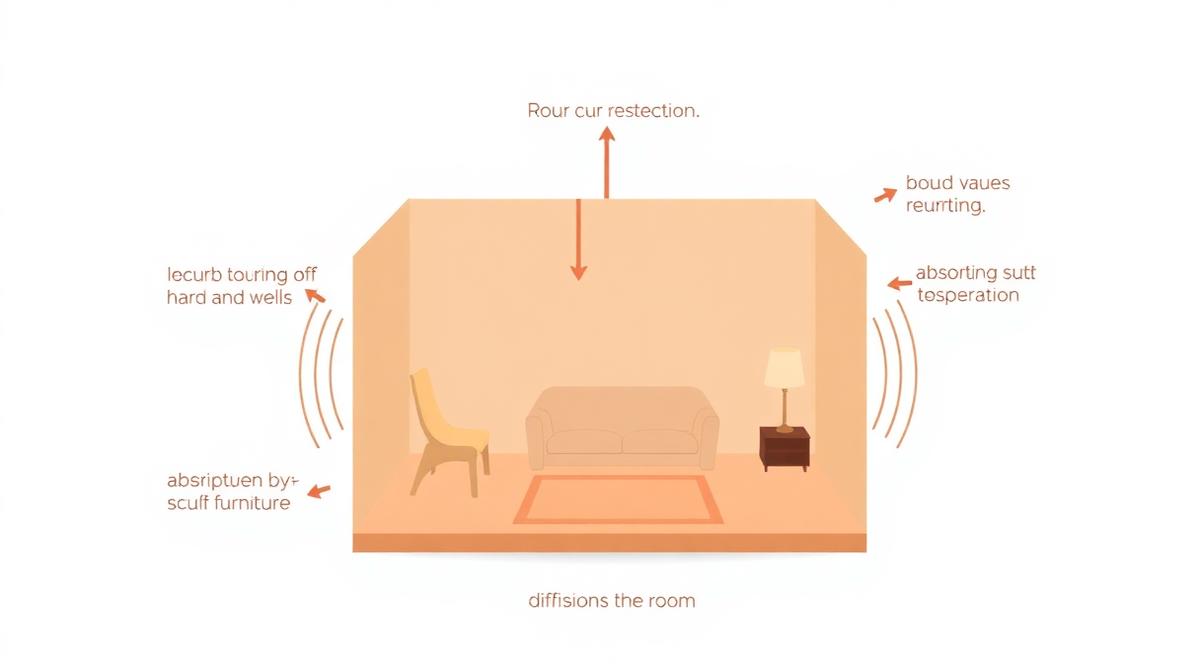
- Highly reflective (low absorption): glass, tile, concrete, plaster — these keep sound bouncing
- Moderately absorptive: wood, thin carpet, light curtains
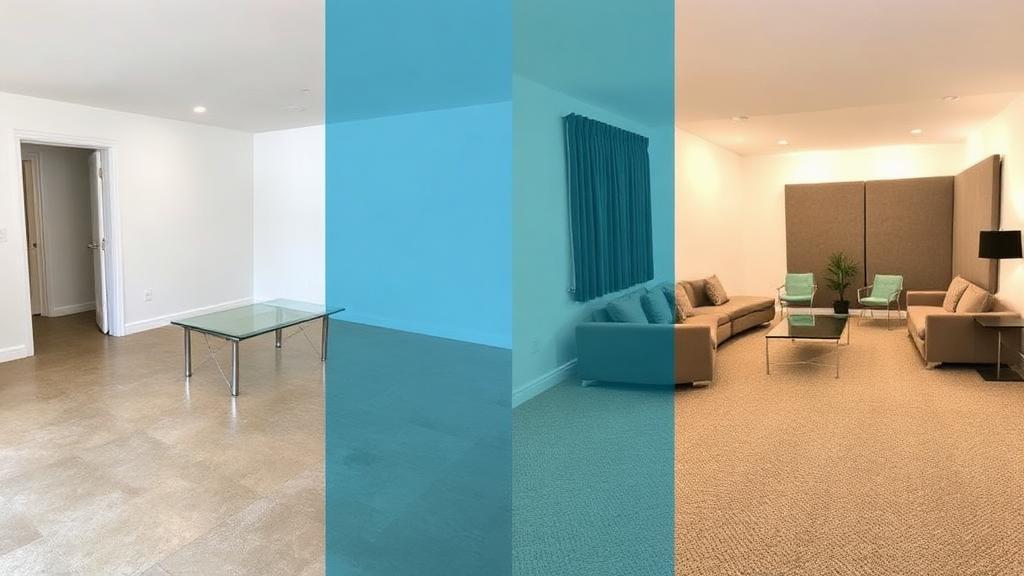
- Highly absorptive: thick carpet, heavy curtains, upholstered furniture, acoustic foam
Room Shape
Parallel walls create flutter echo — a rapid, buzzing repetition as sound bounces back and forth. Non-parallel walls, angled ceilings, and irregular surfaces scatter sound more evenly and reduce flutter.
Air Absorption
At high frequencies (above 2 kHz), air itself absorbs sound energy. This effect is minimal in small rooms but becomes significant in large spaces like concert halls.
Get a baseline reading. [Measure your room with SnapRoomScore](/) — instant, free, and no installation required.
Too Much vs Too Little Reverberation
Too Much Reverberation (RT60 > 1.0s in a home)
- Speech sounds muddy and unclear
- Video calls have annoying echo
- Music sounds boomy and unfocused
- The room feels "cold" or "institutional"
- Background noise accumulates
Too Little Reverberation (RT60 < 0.2s)
- The room feels "dead" and oppressive
- Sounds feel unnaturally close
- Music lacks warmth and richness
- People unconsciously raise their voices
- The space feels claustrophobic
The goal is finding the sweet spot for your room's purpose. Most home rooms benefit from an RT60 between 0.3 and 0.7 seconds.
How to Estimate Your Room's RT60
The Clap Test
The simplest method: clap once and listen. If the sound:
- Dies instantly → RT60 under 0.3s (very dead)
- Lingers briefly → RT60 around 0.4–0.6s (good for most rooms)
- Rings noticeably → RT60 around 0.7–1.0s (getting echoey)
- Rings for over a second → RT60 above 1.0s (too much for homes)
Using Your Phone
Some acoustic measurement apps can estimate RT60 by analyzing the decay of an impulse sound. While not as accurate as professional measurement, these provide useful ballpark figures.
Reducing Reverberation Time
If your room's RT60 is too long, these strategies help — listed from easiest to most involved:
- Add area rugs — carpet on hard floors provides significant absorption
- Hang heavy curtains — floor-to-ceiling curtains on windows and bare walls
- Add upholstered furniture — sofas, armchairs, and cushions absorb mid and high frequencies
- Fill bookshelves — books are excellent diffusers and absorbers
- Install acoustic panels — targeted absorption at first reflection points
- Add bass traps — corner-mounted treatments for low-frequency buildup
- Apply ceiling treatment — clouds or panels reduce vertical reflections
For a complete list of practical improvements, read our guide on how to fix room echo and improving acoustics without expensive panels.
Start by understanding your space. [Measure your room's noise level now with SnapRoomScore](/) — it takes seconds and reveals your room's acoustic baseline.
FAQ
What is a good RT60 for a living room?
A comfortable living room typically has an RT60 between 0.4 and 0.6 seconds. This provides enough 'life' for the room to feel natural without excessive echo or muddiness.
How is RT60 measured?
RT60 is measured by producing a loud impulse sound (like a balloon pop or starter pistol) and recording how long it takes for the sound level to drop by 60 dB. Professional tools and some apps can estimate this value.
Can I measure RT60 with my phone?
Specialized apps can estimate RT60 by analyzing the decay of a clap or balloon pop. While not as precise as professional measurement, these estimates are useful for identifying whether your room has excessive reverberation.