Why Your Room Echoes (And How to Fix It)
Last updated: March 17, 2026
Reviewed by acoustic research sources and WHO guidelines.
You clap your hands in your room and the sound rings back at you. Your voice sounds hollow during video calls. Music feels harsh and unclear. These are all signs of excessive echo — and it is one of the most common acoustic problems in homes and offices.
In this guide, we explain exactly why rooms echo, the science behind it, and practical steps to fix it — from free rearrangements to affordable treatments.
Table of Contents
- What Causes Echo in a Room?
- Echo vs Reverberation: What Is the Difference?
- The Science of Sound Reflection
- Why Some Rooms Echo More Than Others
- How to Test If Your Room Has Too Much Echo
- 8 Ways to Reduce Echo in Any Room
- When to Consider Professional Acoustic Treatment
- FAQ
Wondering how your room sounds? [Measure your room's noise level with SnapRoomScore](/) to get an instant acoustic snapshot.
What Causes Echo in a Room?
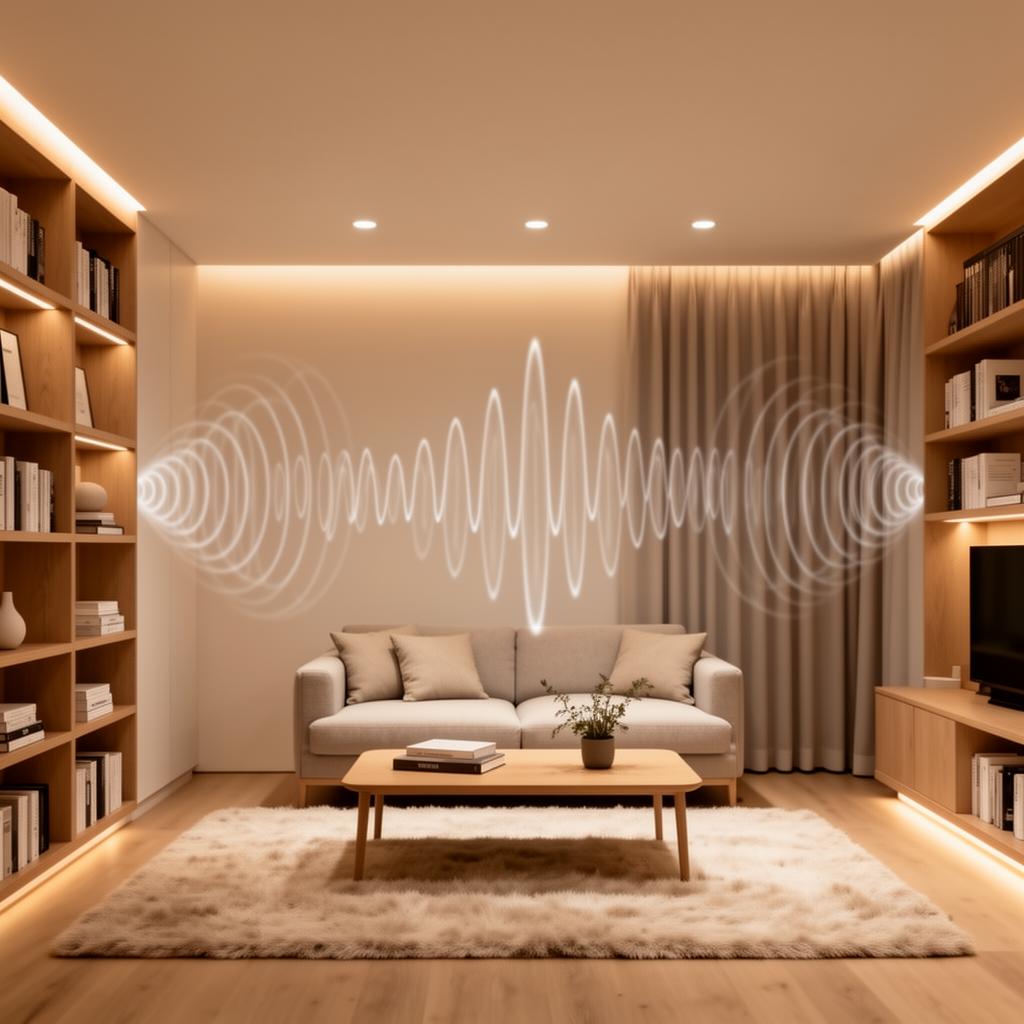
Echo occurs when sound waves travel from a source (your voice, a speaker, a clap), hit a surface, and bounce back to your ears with enough delay to be heard as a separate sound. In outdoor environments, this requires a reflecting surface at least 17 meters away.
Indoors, the distances are shorter, so instead of a clean echo you get reverberation — a rapid series of overlapping reflections that make the room sound "live," hollow, or boomy.
The main culprits:
- Hard floors — tile, hardwood, laminate, and concrete reflect nearly all sound energy
- Bare walls — drywall, plaster, and brick are highly reflective
- Glass windows — large windows act as acoustic mirrors
- High ceilings — more volume means longer reverberation
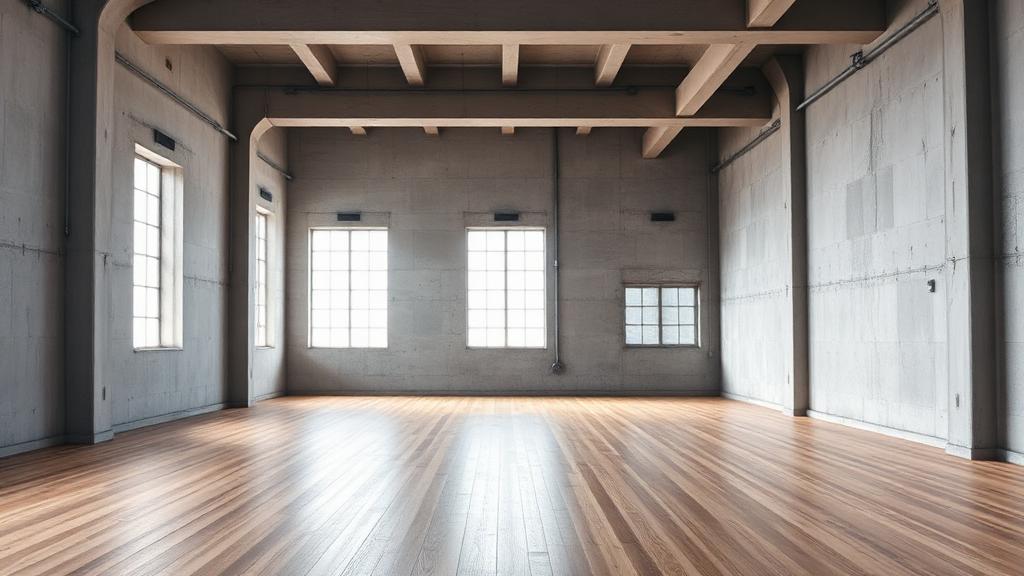
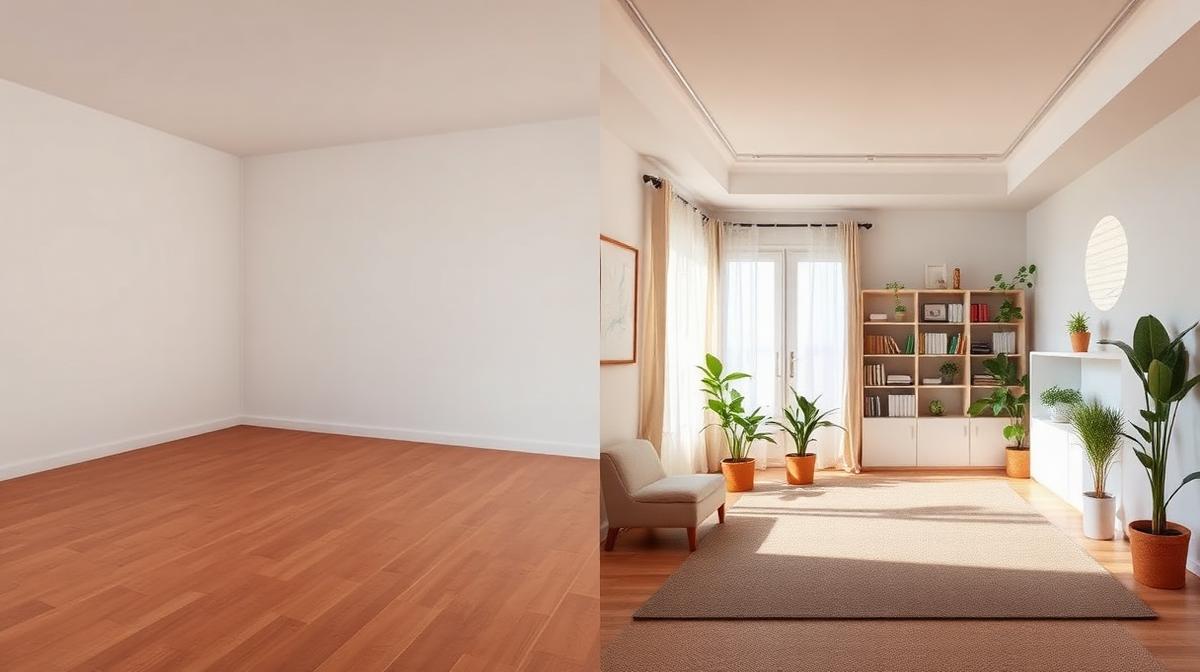
- Lack of furniture — empty rooms have nothing to absorb sound
Echo vs Reverberation: What Is the Difference?
These terms are often used interchangeably, but they describe different phenomena:
| Property | Echo | Reverberation |
|---|---|---|
| Definition | Distinct repetition of sound | Blend of many overlapping reflections |
| Minimum distance | ~17 meters to reflector | Any enclosed space |
| Perception | Clear repeat of original sound | Prolonged "tail" or ringing |
| Common location | Large halls, canyons | Bedrooms, offices, living rooms |
When people say "my room echoes," they almost always mean excessive reverberation. The solution is the same: reduce the amount of sound energy bouncing around the room.
For a deeper technical explanation, see our guide on what reverberation time (RT60) means.
The Science of Sound Reflection
When a sound wave hits a surface, three things can happen:
- Reflection — the wave bounces off (hard, flat surfaces)
- Absorption — the wave's energy is converted to heat (soft, porous materials)
- Diffusion — the wave scatters in multiple directions (irregular surfaces)
A room with mostly reflective surfaces keeps sound energy alive longer. Each reflection loses only a small percentage of energy, so the sound bounces around many times before dying out.
The reverberation time (RT60) measures how long it takes for sound to decay by 60 dB after the source stops. A typical living room has an RT60 of 0.4–0.8 seconds. An empty room can exceed 2 seconds — which feels uncomfortably echoey.
Learn more about how sound behaves indoors in our complete guide to room noise and acoustic quality.
Why Some Rooms Echo More Than Others
Several factors determine how much a room echoes:
Room Size and Shape
Larger rooms have longer reverberation times because sound waves travel farther between reflections. Rooms with parallel walls create standing waves — specific frequencies that resonate and sustain, creating an uneven sound.
Surface Materials
- Highly reflective: glass, tile, concrete, marble, painted drywall
- Moderately reflective: wood paneling, brick
- Absorptive: carpet, curtains, upholstered furniture, acoustic foam
Furniture Density
A furnished room absorbs significantly more sound than an empty one. Every sofa, bookshelf, rug, and cushion reduces reverberation. This is why empty rooms sound so different from furnished ones.
Ceiling Height
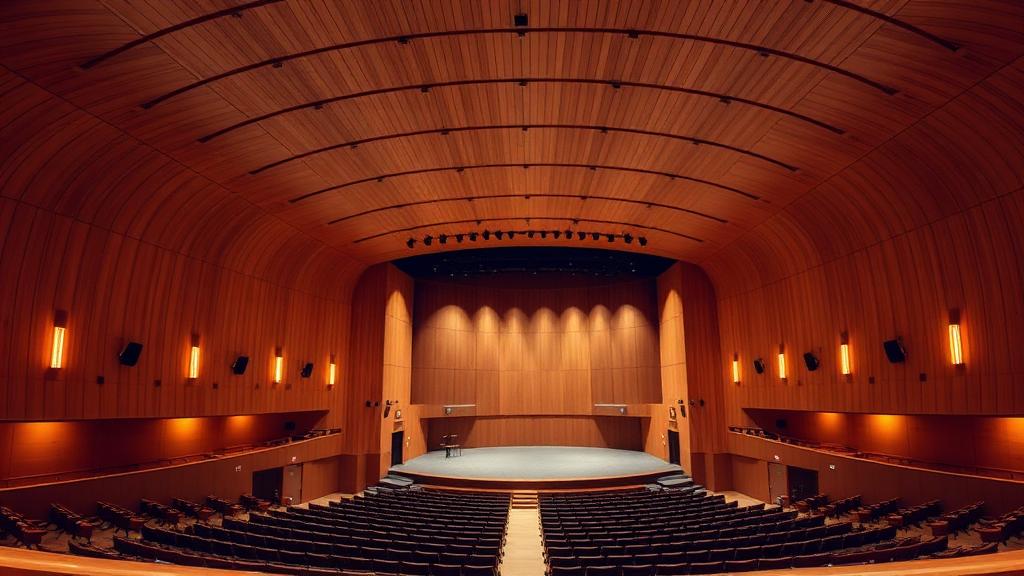
Higher ceilings increase the room's volume, giving sound more space to travel and reflect. Cathedral ceilings and double-height spaces are especially challenging acoustically.

Hear the difference yourself. [Test your room with SnapRoomScore](/) — instant measurement, no download needed.
How to Test If Your Room Has Too Much Echo
A simple clap test reveals a lot:
- Stand in the center of your room
- Clap your hands once, loudly
- Listen to how long the sound lingers
If the clap sustains for more than ~0.5 seconds with a noticeable ring, your room has significant reverberation. If it sounds crisp and stops quickly, your room has good absorption.
For a more objective measurement, use SnapRoomScore to measure your ambient noise level. Rooms with excessive reverberation tend to show higher background noise readings because reflected sound accumulates.
8 Ways to Reduce Echo in Any Room
1. Add Rugs or Carpet
Hard floors are the biggest single contributor to room echo. A large area rug on a hard floor can reduce reverberation by 20–30%. Thicker rugs with underlay work best.
2. Hang Heavy Curtains
Floor-to-ceiling curtains over windows absorb a surprising amount of sound. Choose thick, lined fabrics — the heavier, the better. Even when the curtains are open, the fabric folds still provide absorption.
3. Fill Bookshelves
A bookshelf packed with books acts as an excellent sound diffuser and absorber. The irregular surface scatters reflections while the paper and binding absorb energy.
4. Use Upholstered Furniture
Swap hard chairs for upholstered ones. Add cushions and throw pillows. A fabric sofa absorbs more sound than a leather one — though both help significantly compared to hard seating.
5. Add Wall Hangings
Tapestries, large canvas prints, or even thick blankets on walls reduce reflections. Position them on the wall directly opposite your primary sound source for maximum effect.
6. Install Acoustic Panels
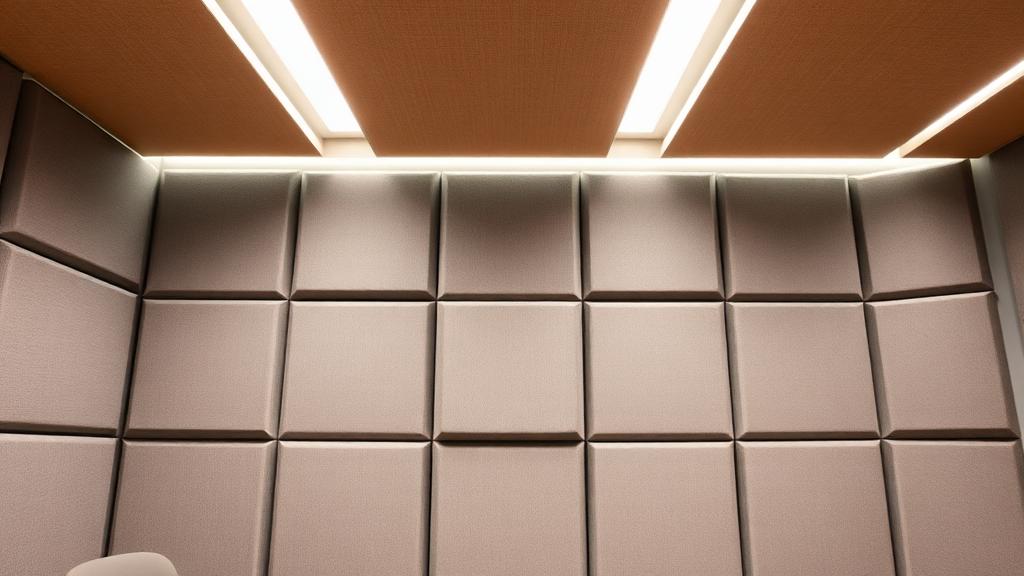
Purpose-built acoustic panels provide targeted absorption. Place them at the first reflection points — the spots on walls and ceiling where sound from your main source (speakers, TV, desk) reflects directly to your listening position.
7. Use Door Seals and Draft Stoppers
While these primarily block sound from entering or leaving a room, they also reduce the amount of sound energy in the space by preventing resonance through gaps.
8. Rearrange Furniture
Break up long, empty walls with furniture. Place bookshelves against bare walls. Angle furniture to avoid parallel reflective surfaces. Sometimes rearranging what you already have makes a noticeable difference.
For more noise reduction strategies, read our guide on 8 ways to reduce noise in a room.
When to Consider Professional Acoustic Treatment
DIY solutions handle most residential echo problems. But if you have:
- A recording studio or podcast room
- A home theater or dedicated listening room
- An unusually large or architecturally challenging space
- Persistent flutter echo between parallel walls
Professional acoustic treatment — including bass traps, diffusion panels, and ceiling clouds — provides precisely targeted solutions that furniture and curtains cannot match.
Start with the basics. [Measure your room's sound profile with SnapRoomScore](/) and see where you stand before investing in any treatment.
FAQ
Why does my room echo so much?
Echo is caused by sound waves reflecting off hard, flat surfaces like bare walls, hard floors, glass windows, and ceilings. Empty rooms with minimal furniture echo the most because there is nothing to absorb or scatter the sound energy.
How do I stop echo in a room cheaply?
Add soft furnishings: thick rugs, heavy curtains, upholstered furniture, and bookshelves filled with books. These absorb sound reflections at a fraction of the cost of acoustic panels.
Is echo the same as reverberation?
Not exactly. An echo is a distinct, delayed repetition of a sound (requiring at least 17 meters of distance). Reverberation is the prolonged 'tail' of overlapping reflections in smaller rooms. Most indoor echo complaints are actually reverberation.