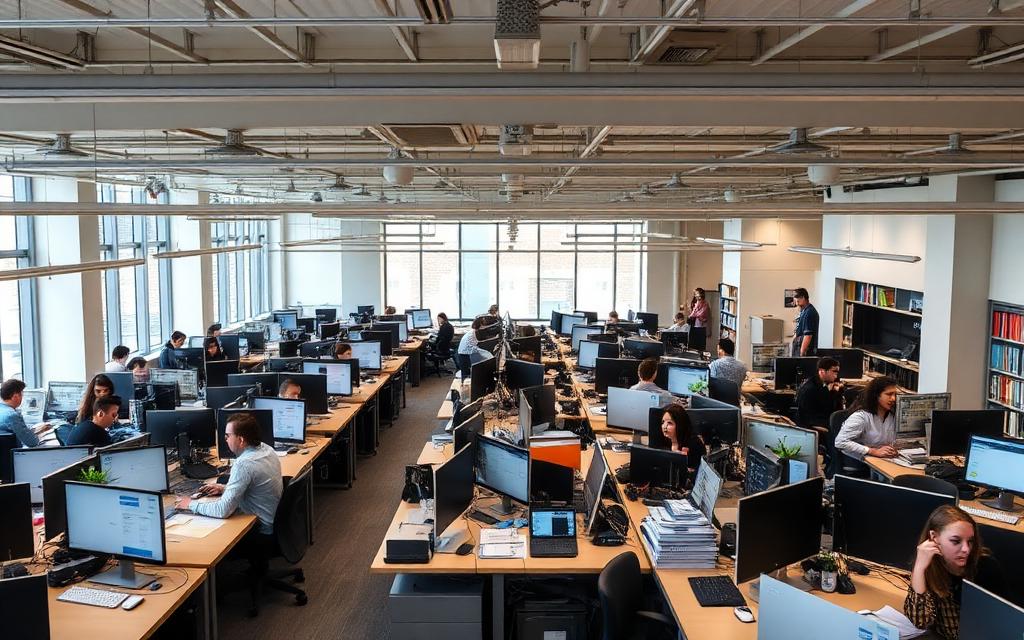
How Loud Is Too Loud at Work? (OSHA & NIOSH 2026)
Last updated: May 22, 2026
Reviewed by acoustic research sources and WHO guidelines.
Workplace noise is a serious concern for both safety and productivity. While industrial noise regulations focus on preventing hearing damage, even moderate office noise can significantly impair cognitive performance and job satisfaction.
This article covers workplace noise standards, what noise levels are safe, common office noise problems, and how you can measure the sound levels at your own workplace.
Table of Contents
- Workplace Noise Standards (OSHA, EU, NIOSH)
- OSHA Hearing Conservation Program
- Noise Levels by Industry
- Safe Noise Levels for Different Work Types
- Office Noise Problems
- How Noise Affects Work Performance
- Measuring Workplace Sound
- Solutions for a Quieter Workplace
- Noise-Induced Hearing Loss (NIHL)
- Remote and Hybrid Work Noise
- Your Legal Rights as an Employee
- Decision Tree & FAQ
Is your workplace too loud? [Measure your office noise with SnapRoomScore](/) – it takes just a minute and requires no installation.
Workplace Noise Standards
Different countries have established workplace noise regulations, but they generally follow similar principles. The most commonly referenced standards come from OSHA (United States) and the EU Noise Directive.
OSHA Noise Standards (US)
OSHA requires employers to implement hearing conservation programs when workplace noise exceeds these levels:
- 85 dB over an 8-hour shift – Action level (hearing protection required)
- 90 dB over an 8-hour shift – Permissible exposure limit
- 100 dB – Maximum exposure of 2 hours
- 115 dB – Maximum exposure of 15 minutes
EU Noise Directive
The EU takes a more conservative approach (Directive 2003/10/EC):
- 80 dB – Lower exposure action value (hearing protection must be available)
- 85 dB – Upper exposure action value (hearing protection mandatory)
- 87 dB – Exposure limit value (must not be exceeded, accounting for protection worn)
NIOSH Recommended Limits (US)
The National Institute for Occupational Safety and Health (NIOSH) recommends a stricter limit than OSHA: 85 dBA over 8 hours as the Recommended Exposure Limit (REL), using a 3 dB exchange rate. Every 3 dB increase halves the allowed exposure time:
| Noise Level (dBA) | NIOSH Max Exposure | OSHA Max Exposure |
|---|---|---|
| 85 | 8 hours | 16 hours |
| 88 | 4 hours | – |
| 91 | 2 hours | – |
| 94 | 1 hour | – |
| 97 | 30 minutes | – |
| 100 | 15 minutes | 2 hours |
| 103 | 7.5 minutes | – |
| 110 | < 2 minutes | 30 minutes |
| 115 | < 30 seconds | 15 minutes |
NIOSH's 3 dB rule reflects modern hearing-loss research more accurately than OSHA's 5 dB rule, which dates to the 1970s.
OSHA Hearing Conservation Program (HCP) Requirements
When 8-hour time-weighted average noise reaches 85 dBA (the Action Level), US employers must implement a Hearing Conservation Program under 29 CFR 1910.95. The program must include:
- Noise monitoring – Periodic measurements at employee work locations
- Audiometric testing – Free annual hearing tests for exposed workers
- Hearing protection – Provided at no cost, with multiple options for fit
- Training – Annual education on noise effects and protection use
- Recordkeeping – Audiograms retained for the duration of employment
- Access to records – Workers can request their exposure and audiogram data
Failure to implement an HCP is one of the most frequently cited OSHA violations in manufacturing.
What About Offices?
These regulations primarily address industrial and construction environments. For office work, there are no strict legal limits, but ISO 22955:2021 (Acoustic quality of open office spaces) and ANSI/ASA S12.2 provide voluntary guidelines, and decades of research provide clear performance thresholds.
Noise Levels by Industry
Real-world workplace noise varies dramatically by sector. These ranges come from OSHA, NIOSH, and HSE (UK) field measurements:
| Industry / Setting | Typical Range (dBA) | Hearing Protection? |
|---|---|---|
| Library / archive | 30–40 | No |
| Private office | 35–45 | No |
| Open-plan office | 55–70 | No |
| Call center | 60–70 | No |
| Retail (small store) | 60–70 | No |
| Restaurant kitchen | 70–85 | Recommended |
| Warehouse (forklifts) | 75–90 | Often required |
| Hospital ER | 65–80 | No |
| Classroom (active) | 65–75 | No |
| Daycare center | 75–85 | Recommended |
| Construction site | 80–110 | Required |
| Manufacturing floor | 85–105 | Required |
| Auto body / metalworking | 90–110 | Required |
| Concert / live music venue | 100–120 | Required |
| Airport ground crew | 110–140 | Required (double protection) |
If you work in any environment above 80 dBA, request a formal noise survey from your safety officer or use a calibrated Type 2 sound level meter for compliance documentation. Phone-based tools like SnapRoomScore are excellent for spot-checks and trend monitoring but are not legally calibrated for OSHA compliance reporting.
Safe Noise Levels for Different Work Types
The ideal noise level depends on the type of work being performed:
| Work Type | Ideal Noise Level | Maximum Recommended |
|---|---|---|
| Deep concentration (coding, writing) | Below 40 dB | 45 dB |
| General office work | 40–45 dB | 50 dB |
| Phone calls and meetings | 40–50 dB | 55 dB |
| Collaborative work | 45–55 dB | 60 dB |
| Light industrial work | Below 80 dB | 85 dB |
| Heavy industrial work | Below 85 dB | 85 dB (with protection) |
The Productivity Sweet Spot
Research suggests that for most knowledge work, noise levels between 35–45 dB provide the best balance between alertness and comfort. Interestingly, complete silence (below 25 dB) can also be uncomfortable, as small sounds become disproportionately noticeable.
Some research suggests that moderate ambient noise around 50–70 dB can actually boost creative thinking, but this comes at the cost of analytical performance.
Office Noise Problems
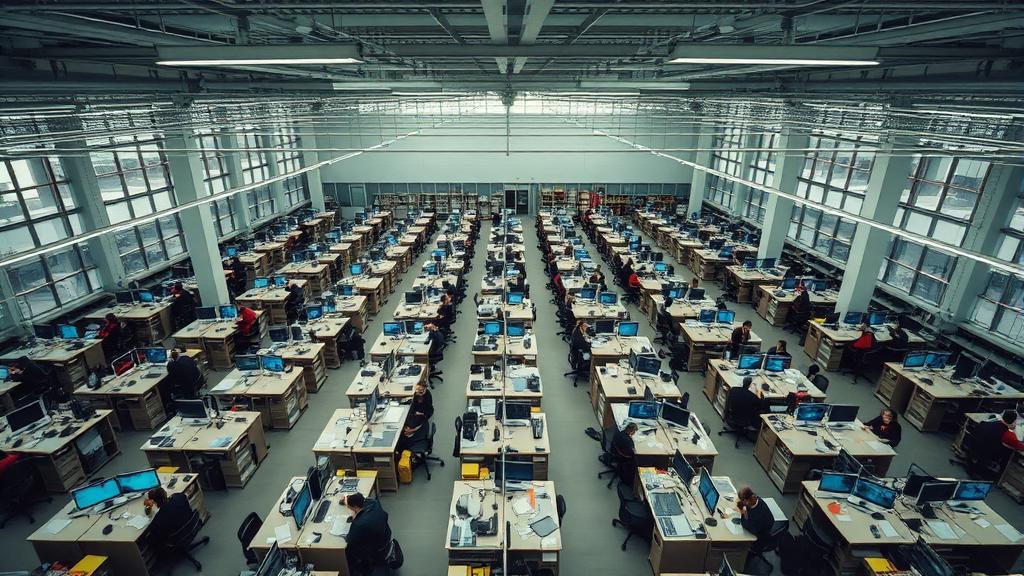
Open-plan offices are the biggest source of noise complaints in modern workplaces. Here are the most common issues:
Top Office Noise Complaints
- Conversations between colleagues – The most frequently cited disturbance
- Phone calls – Especially in open areas without phone booths
- Keyboard typing – Particularly mechanical keyboards
- HVAC systems – Constant background hum
- Office equipment – Printers, copiers, coffee machines
- Foot traffic – People walking through open areas
- Notification sounds – Phone alerts and computer notifications
Open-Plan vs Private Offices
| Feature | Open-Plan | Private Office |
|---|---|---|
| Typical noise level | 55–70 dB | 35–45 dB |
| Conversation privacy | Low | High |
| Distraction frequency | High | Low |
| Collaboration ease | High | Moderate |
| Productivity for focus work | 30–40% lower | Baseline |
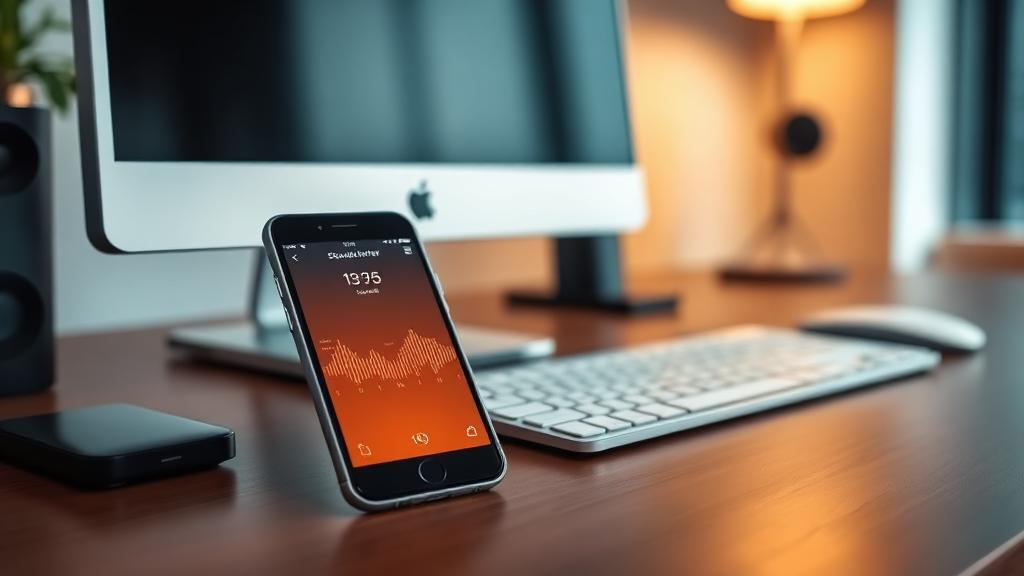
Measure your workspace now. [Open SnapRoomScore](/) and see exactly how loud your office is.
How Noise Affects Work Performance
The impact of workplace noise on performance is well-documented by research:
Cognitive Performance
- Focus and concentration decrease by up to 66% at noise levels above 55 dB
- Error rates increase by 15–25% in noisy environments
- Task completion time increases by 20–40% for complex tasks
- Recovery time after a noise interruption averages 23 minutes
Communication
- At 50 dB background noise, normal conversation (60 dB) is easily understood
- At 65 dB background noise, you need to raise your voice to be heard
- Above 70 dB, effective verbal communication becomes difficult
Health and Wellbeing
- Stress – Open-office workers show 25% higher cortisol levels than those in private offices
- Job satisfaction – Noise is the #1 complaint in open-plan offices
- Hearing fatigue – Constant noise processing leads to tiredness even at non-damaging levels
- Blood pressure – Elevated in workers exposed to noise above 65 dB
Measuring Workplace Sound
Understanding your workplace noise level is the first step to improving it. Here is how to measure effectively:
How to Measure
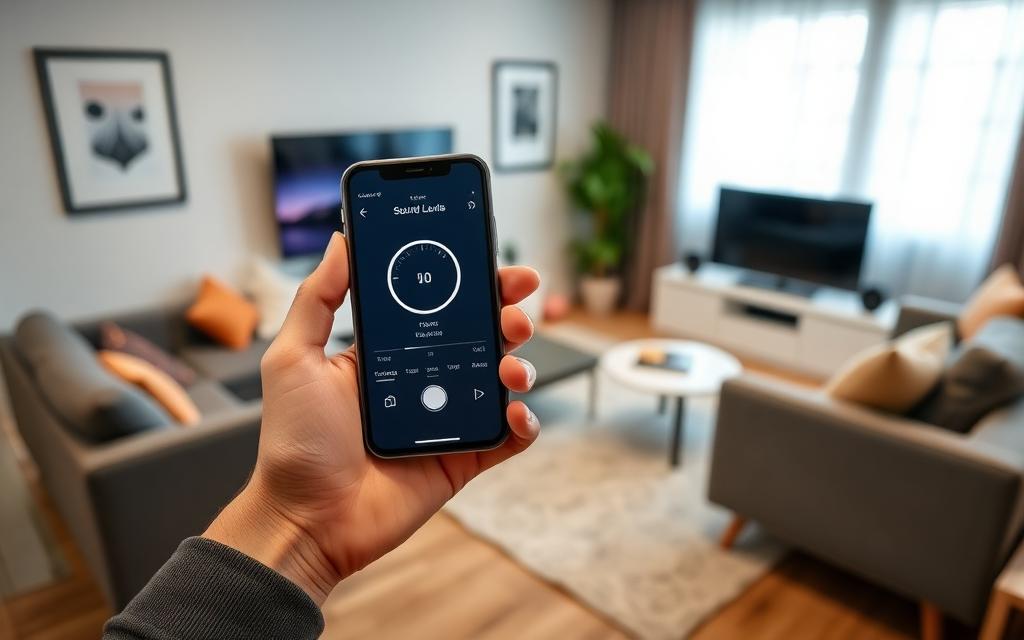
- Open [SnapRoomScore](/) on your phone or laptop
- Place your device on your desk at normal working position
- Measure during typical work hours (not during lunch or before people arrive)
- Run the measurement for at least 2–5 minutes for a representative sample
- Note the average, peak, and minimum values
What to Measure
Take readings in different scenarios:
- Busy office hours – When most colleagues are present
- Quiet periods – Early morning or late afternoon
- During meetings in shared spaces
- With and without headphones – Compare ambient vs isolated noise
For tips on getting the best measurements with your phone, see our guide on how to measure noise in a room using your phone.
Solutions for a Quieter Workplace
Whether you are an employee looking for personal solutions or a manager planning office improvements, here are effective strategies:
Personal Solutions
- Noise-canceling headphones – The single most effective personal tool (reduces noise by 20–30 dB)
- White or brown noise – Use a noise app to mask unpredictable sounds
- Schedule deep work during quiet hours
- Request a quieter location if your desk is in a high-traffic area
Office-Level Solutions
- Acoustic panels on walls and ceilings
- Sound masking systems that add gentle background noise
- Phone booths and quiet rooms for focused work
- Carpet or soft flooring instead of hard surfaces
- Desk dividers with acoustic padding
- Plants – Dense plant arrangements can reduce noise by 5–10 dB
Policy Solutions
- Establish quiet zones where conversations are not allowed
- Create phone call areas separate from work desks
- Set headphone etiquette – encourage headphone use for audio
- Allow remote work for tasks requiring deep concentration
For more comprehensive noise reduction techniques, read our article on 8 ways to reduce noise in a room. Also check acceptable noise levels for specific workplace and office guidelines.
Take control of your work environment. [Measure your workplace noise with SnapRoomScore](/) – it's free, private, and works in any browser.
Noise-Induced Hearing Loss (NIHL) at Work
Occupational hearing loss is the most common work-related injury in the US. According to the CDC:
- 22 million US workers are exposed to hazardous noise each year
- 24% of all hearing difficulty among US workers is attributable to occupational exposure
- $242 million is spent annually on workers' compensation for hearing loss disability
- NIHL is 100% preventable with proper controls — but permanent once it occurs
Early Warning Signs
NIHL develops gradually and is often unnoticed until significant damage is done. Watch for:
- Tinnitus (ringing or buzzing) after a work shift, even if it fades overnight
- Temporary threshold shift — speech sounding muffled after work
- Trouble hearing high-pitched voices (children, women) before low-pitched ones
- Difficulty understanding speech in noisy restaurants despite normal volume hearing
- Asking people to repeat themselves more often than colleagues
If you notice these, request an audiogram through your employer's HCP or see an audiologist independently.
The Hierarchy of Controls
Both OSHA and NIOSH require employers to address noise using a defined priority order, not just by handing out earplugs:
- Elimination – Remove the noise source (e.g., relocate equipment outdoors)
- Substitution – Replace with quieter equipment (newer compressors, electric tools)
- Engineering controls – Enclosures, vibration damping, mufflers, sound barriers
- Administrative controls – Job rotation, scheduled quiet hours, signage
- Personal protective equipment (PPE) – Earplugs and earmuffs (last resort)
PPE alone is the weakest control because compliance is variable and fit affects performance. A pair of foam earplugs is rated NRR 29 dB but typically delivers only 12–15 dB of real-world reduction due to imperfect insertion.
Remote and Hybrid Work: A New Noise Equation
The shift to remote and hybrid work has changed workplace noise patterns substantially:
Home Office Noise Sources
Unlike traditional offices, home noise is unpredictable and often outside your control:
- HVAC systems – Older home systems often run 45–55 dB
- Traffic – Especially for ground-floor or street-facing rooms
- Family and pets – Children, partners on calls, dogs, doorbells
- Appliances – Dishwashers, washing machines, refrigerator compressors
- Neighbors – Apartment walls transmit voices and footfall
Hybrid Workers Report Best Outcomes
Survey data from 2024–2025 shows hybrid workers consistently report higher focus and satisfaction than fully remote or fully in-office workers, largely because they can match the environment to the task: collaborative work in the office, deep focus at home (or vice versa, depending on home conditions).
To optimize your home setup, measure your home office noise and apply targeted fixes from our room noise reduction guide.
Your Legal Rights as an Employee (US)
Workers exposed to hazardous noise have specific rights under OSHA:
- Right to know – Request copies of any noise monitoring conducted at your worksite
- Right to audiograms – Free annual hearing tests when exposed at or above 85 dBA TWA
- Right to hearing protection – Multiple types must be offered at no cost
- Right to file a complaint – OSHA complaints can be filed anonymously online or by phone (1-800-321-OSHA)
- Right to refuse retaliation – Section 11(c) of the OSH Act prohibits firing or punishing workers for raising safety concerns
If you believe your workplace exceeds OSHA limits and your employer has not addressed it, document the conditions (date, time, duration, your role) and consider filing a complaint. OSHA must investigate complaints involving imminent danger within 24 hours.
For non-US workers, similar protections exist under the EU Noise Directive (2003/10/EC), the UK Control of Noise at Work Regulations 2005, and equivalent legislation in Canada (provincial OHS acts) and Australia (state WHS regulations).
Quick Reference: Decision Tree
Is your workplace noise above 85 dBA averaged across 8 hours?
- Yes → Hearing Conservation Program is required. Demand audiograms, monitoring, and free PPE. Engineering controls should be the priority.
- No, but above 70 dBA → Not legally hazardous, but productivity will suffer. Request acoustic improvements and use noise-canceling headphones.
- No, between 50–70 dBA → Typical open office. Apply the personal solutions below.
- Below 50 dBA → Healthy range. Maintain it by controlling new noise sources.
FAQ
What is a safe noise level at work?
For offices and knowledge work, noise should ideally stay below 45–50 dB for optimal concentration. In industrial settings, OSHA requires hearing protection when noise exceeds 85 dB averaged over an 8-hour shift (the Action Level).
Can office noise affect productivity?
Yes. Research shows that open-office noise above 55 dB can reduce cognitive performance by up to 66%. Tasks requiring deep concentration are most affected.
How do I measure noise at my workplace?
Use a browser-based tool like SnapRoomScore on your phone or laptop. Place your device at your desk and measure for at least 2 minutes during typical work conditions, ideally several times across a workday.
What is the OSHA 90 dB rule?
OSHA's Permissible Exposure Limit (PEL) is 90 dBA averaged over an 8-hour workday using a 5 dB exchange rate. For every 5 dB increase, the allowed exposure time is halved: 95 dBA for 4 hours, 100 dBA for 2 hours, and so on up to 115 dBA for 15 minutes.
Is my employer required to provide hearing protection?
Under OSHA 29 CFR 1910.95, if 8-hour time-weighted average noise reaches 85 dBA (the Action Level), employers must offer a Hearing Conservation Program: free hearing protection, annual audiograms, training, and noise monitoring.
What does dBA mean and why does it matter?
dBA is A-weighted decibels — a scale that adjusts sound levels to match how the human ear perceives loudness. All workplace noise standards (OSHA, NIOSH, EU) use dBA, not flat dB, because it better predicts hearing damage risk.
Can remote work solve workplace noise problems?
Partially. Remote work removes open-office distractions but introduces home noise sources like traffic, family, and HVAC. Hybrid workers report the highest satisfaction when they can choose office days for collaboration and home days for deep focus.
How accurate is a phone for measuring workplace noise?
Smartphone meters are generally accurate to within ±3–5 dB in the 45–85 dB range, which is sufficient for spot-checks and identifying problem areas. They are not Type 1 or Type 2 calibrated and cannot be used for legal OSHA compliance documentation. For that, an employer must use a calibrated dosimeter or sound level meter.