Loud Upstairs Neighbors: How to Reduce Apartment Noise
Last updated: October 10, 2026
Reviewed by acoustic research sources and WHO guidelines.
Footsteps across the ceiling, a chair scraping at midnight, a dropped object that sounds like it landed on your bed. Noise from the flat above is one of the most common complaints in apartment buildings — and one of the hardest to fix from below.
This guide explains why upstairs noise travels the way it does, what you can realistically change yourself, what needs your landlord or building, and how to handle it with your neighbour.
Quick Answer
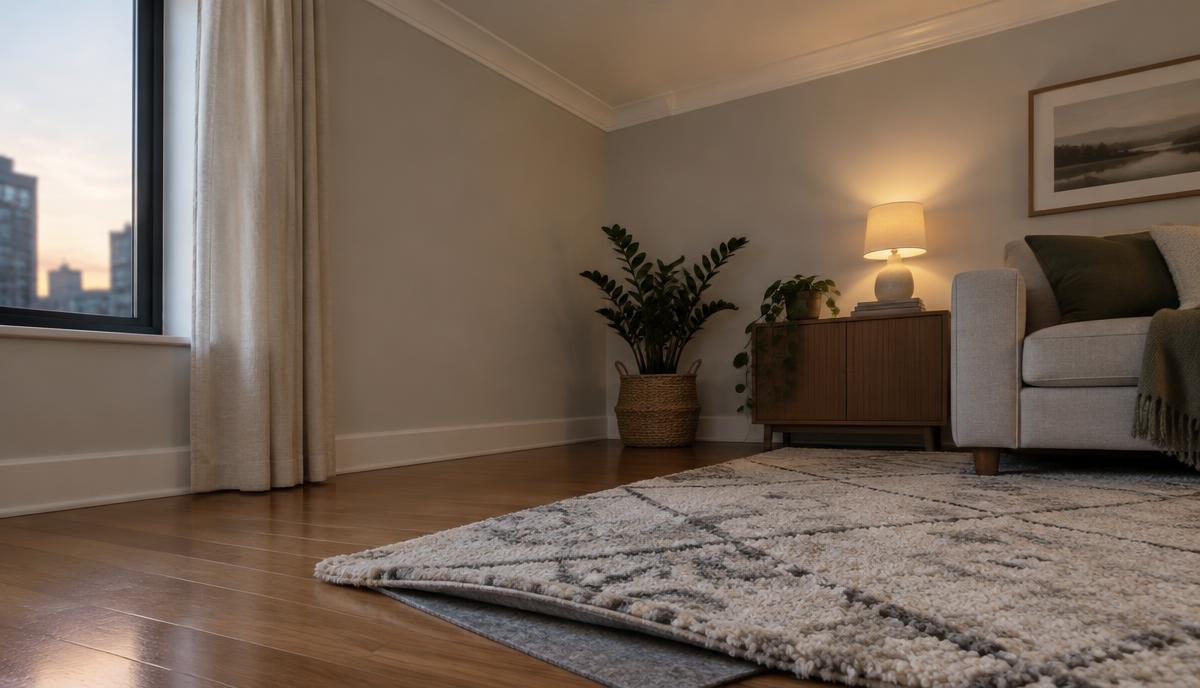
Most noise from upstairs neighbours is impact noise — footsteps and knocks that vibrate the floor structure. It is best reduced at the source: rugs with a resilient underlay, felt pads on furniture and softer footwear in the flat above. From below, ceiling foam and decorative panels rarely help. Your most effective steps are usually a friendly, specific conversation, small changes in how you use your own rooms, and — if that fails — involving the landlord or building management with a dated record of the problem.
Table of Contents
- Impact Noise vs Airborne Noise
- Why Footsteps Travel Through Buildings
- What Does Not Work (and Why)
- What Renters Can Do
- What Needs the Landlord or Building
- Talking to Your Neighbour
- Keeping a Noise Diary
- Structural Fixes and Their Limits
- When to Get a Professional Assessment
- FAQ
Impact Noise vs Airborne Noise
Not all upstairs noise is the same, and the difference decides what can help:
| Impact noise | Airborne noise | |
|---|---|---|
| Typical sounds | Footsteps, heels, dropped objects, furniture dragging, running children, washing machines on spin | Voices, TV, music, barking |
| How it travels | Directly into the floor structure as vibration | Through the air, then through the ceiling and gaps |
| What helps most | Softening the impact at the source (rugs + underlay, felt pads, resilient flooring) | Mass, sealing gaps, and decoupled construction |
| What helps little | Ceiling foam, wall panels | Rugs on the floor above (some benefit, but limited) |
Many people experience both at once. Bass from music is airborne, but low frequencies pass through floors much more easily than speech.
Why Footsteps Travel Through Buildings
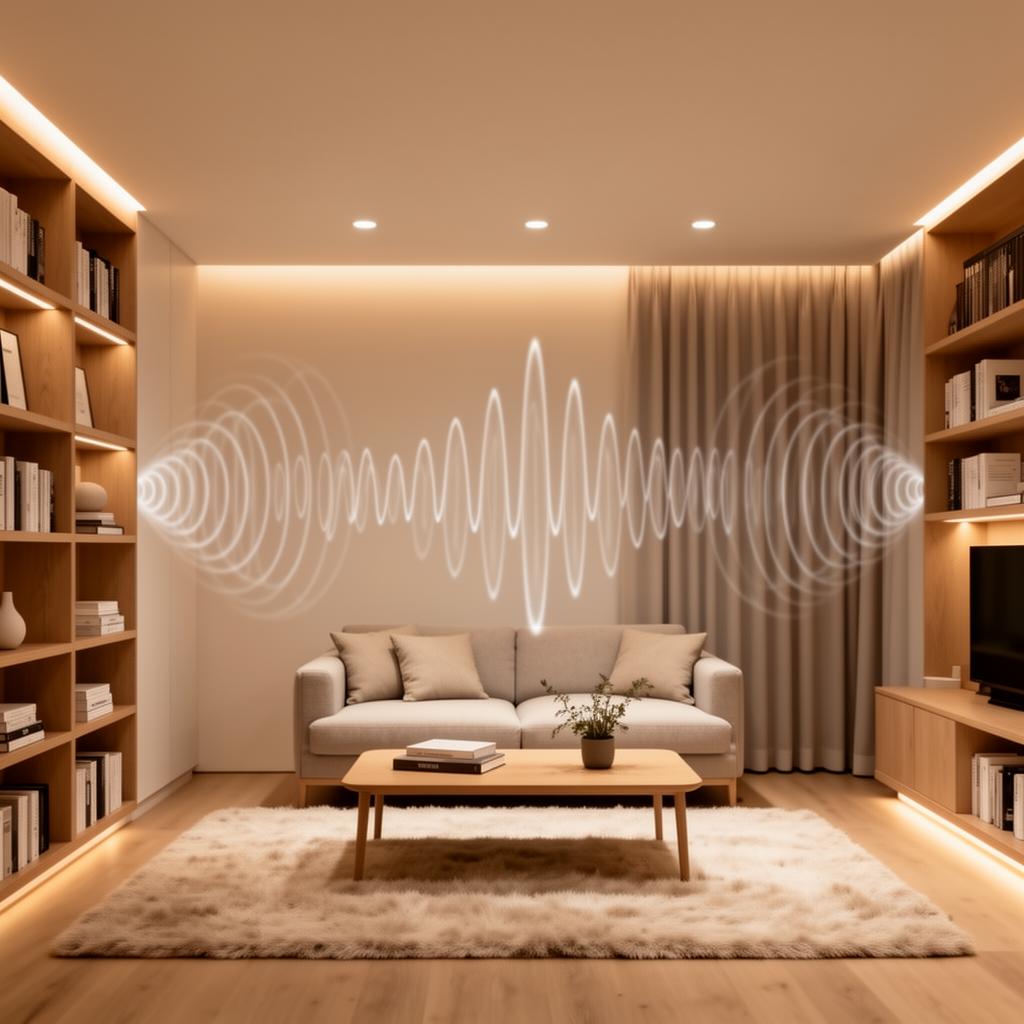
When a heel hits a hard floor, the energy goes straight into the floor slab or joists. The floor-ceiling structure then vibrates as a whole, and your ceiling acts like a large, thin loudspeaker. Several things make this worse:
- Hard flooring (laminate, tiles, wood) laid without a proper resilient underlay
- Lightweight construction, such as timber joist floors in older or converted buildings
- Rigid connections — a ceiling fixed directly to the joists transmits vibration efficiently
- Flanking paths — vibration can also travel through walls and connecting structures, so noise may seem to come from somewhere other than where it starts
This is why a neighbour walking normally can sound loud below, even when their flat sounds quiet to them.
What Does Not Work (and Why)
- Acoustic foam or panels on your ceiling. They absorb sound in your room — useful for echo — but are far too light to stop structural vibration.
- Egg-crate foam, blankets or cork tiles stuck to the ceiling. Same problem, and some materials add fire risk. Do not add combustible materials to ceilings.
- Sealing your own gaps helps against airborne sound from corridors or neighbours, but does little for footsteps.
- "Anti-vibration" gadgets placed in your own flat cannot reduce vibration that originates in the floor above.
What Renters Can Do
You cannot rebuild the ceiling, but you can change how much the noise affects you:
- Move the bed away from the area above which the neighbour walks most (often hallways and kitchens). Even a different wall or room can help.
- Use steady masking sound — a fan or gentle background sound at a modest volume — at night so isolated thuds stand out less.
- Use earplugs for sleep if they are comfortable for you.
- Reduce echo in your own room with rugs, curtains and soft furnishings. This does not block footsteps, but a less echoey room can make the overall noise feel less harsh.
- Seal gaps around your entrance door if voices and corridor noise are also a problem.
If you want an informal sense of when noise happens, SnapRoomScore can show the general pattern on your device. It is an uncalibrated browser meter: it can help you notice timing and relative changes, but it cannot measure impact-noise insulation or provide reliable evidence.
What Needs the Landlord or Building
Some solutions are only available to the owner of the flat above, the landlord or the building association:
- Rugs with underlay or resilient flooring upstairs — many leases and house rules require floor coverings; ask your landlord whether yours do
- Replacing hard flooring with a system that includes an impact-sound underlay
- Fixing loose floorboards or squeaks
- Installing a decoupled ceiling below (resilient channels or independent ceiling joists, with insulation in the cavity)
- Checking building rules about quiet hours, appliance use or flooring
Rules about noise, quiet hours and flooring vary by country, city, lease and building. We do not list specific rights or limits because they differ by location — check your rental agreement, house rules or local authority.
Talking to Your Neighbour
Many neighbours have no idea how much they can be heard. A calm, specific conversation is often the fastest fix:
- Choose a calm moment, not right after a disturbance
- Be specific: "I can hear footsteps in the hallway around 11 p.m. to 1 a.m." works better than "you're too loud"
- Assume good faith — they may not know the floor transmits sound so easily
- Suggest concrete options: a hallway runner, felt pads on chair legs, softer shoes indoors
- Offer something back, for example to let them know if your own noise is ever a problem
- Follow up in writing with a short, friendly note summarising what you agreed
If you share a landlord or building management, ask whether they can mediate before things escalate.
Keeping a Noise Diary
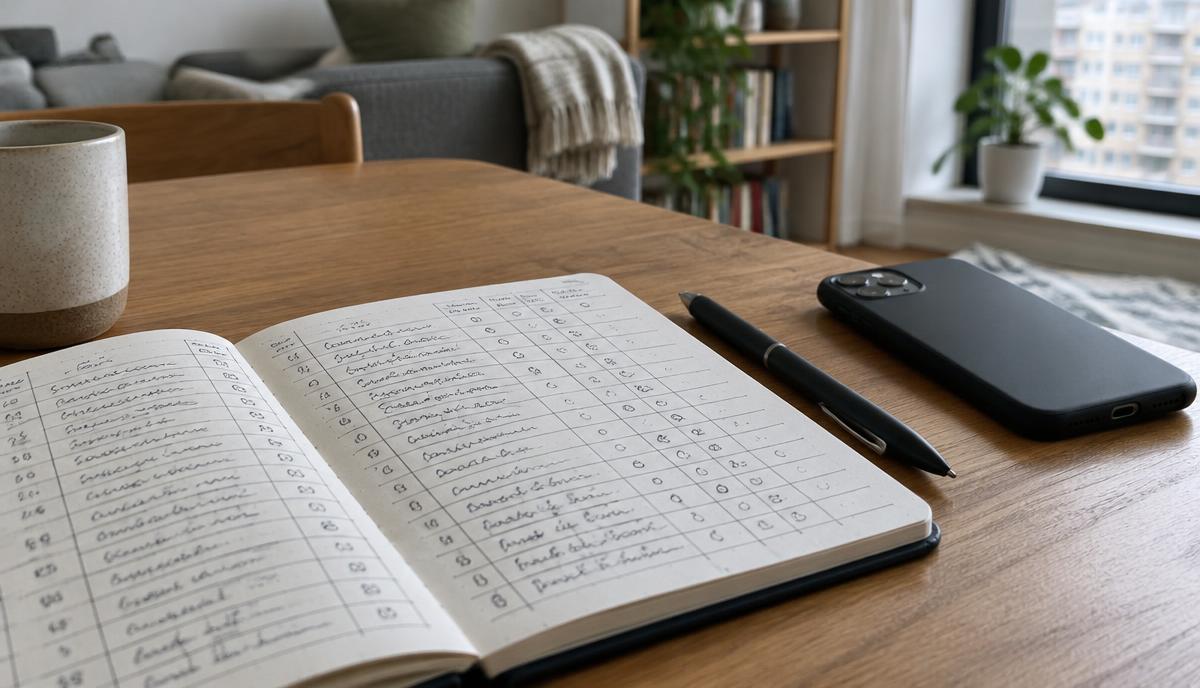
If the problem continues, a dated record helps landlords and building managers understand the pattern. Note for each disturbance:
| Date | Time (start–end) | What you heard | Where in your flat | Effect (e.g. woke up, couldn't work) |
|---|
Keep it factual and consistent. A diary describing repeated, specific disturbances is usually more useful than any single decibel reading — and a phone or browser reading should never be presented as an official measurement.
Structural Fixes and Their Limits
Real reductions in impact noise usually need building work. Building-regulation guidance such as the UK's Approved Document E assesses impact sound separately from airborne sound, and relies on resilient floor layers and independent ceilings rather than surface treatments:
- At the source (above): resilient underlays, floating floors or carpet with underlay are generally the most effective way to reduce footstep noise.
- Below: a decoupled ceiling with insulation can help, but it lowers the ceiling height, is expensive, and its benefit depends heavily on design and workmanship. Flanking paths through walls can limit the improvement.
- Low-frequency thuds (heavy footsteps on lightweight floors) are particularly hard to reduce.
Before any structural work, the building owner should check building, fire and planning rules; floors and ceilings between flats often form part of the fire separation (see Approved Document B for the UK principle), so tenants should not modify them and any work should be done by the owner with appropriate approval.
When to Get a Professional Assessment
Consider an acoustic consultant when:
- The noise is severe and ongoing despite reasonable changes by your neighbour
- You or the building owner are considering expensive floor or ceiling work
- A formal dispute needs measurements to recognised standards
A professional can measure impact and airborne sound insulation with calibrated equipment and standardised methods, identify flanking paths and recommend targeted fixes. That is not something a phone or browser meter can do.
Want to see when the noise happens? [Open SnapRoomScore](/) for an informal look at your room's noise pattern — free, with audio processed locally in your browser.
Sources
- UK Government — Approved Document E: Resistance to the passage of sound: building-regulation guidance that treats airborne and impact sound separately for floors between dwellings, and describes floor constructions with resilient layers and independent ceilings. Requirements differ in other countries, but the physical principles are the same.
- UK Government — Approved Document B: Fire safety: why floors and ceilings between flats often form fire-separating elements, and why changes to them need proper materials and approval.
Related Guides
- How to soundproof a room or bedroom — sealing gaps, doors, windows and walls
- How to reduce echo in a room — absorption inside your own room
- Bedroom noise levels for sleep — guidance for nights
FAQ
Why can I hear my upstairs neighbors walking so clearly?
Footsteps are impact noise: each step strikes the floor directly and makes the whole floor-ceiling structure vibrate, which radiates sound into your room. Hard flooring without a resilient underlay, lightweight floor construction and rigid connections between floor and ceiling all make it worse.
Will acoustic foam on my ceiling stop footsteps?
Usually not. Foam and decorative panels absorb sound already in your room, which can reduce echo, but they are far too light to stop vibration travelling through the structure. Real improvements to impact noise usually need changes on the floor above or a decoupled ceiling.
What can I do as a renter about loud upstairs neighbors?
Talk to the neighbour first, calmly and specifically. Ask whether rugs with underlay could go in hallways or living areas. In your own flat, move the bed away from the noisiest area and use steady masking sound or earplugs at night. Keep a dated noise diary, and involve the landlord or building management if the problem continues.
Can I use SnapRoomScore as evidence of a noise problem?
No. SnapRoomScore is an uncalibrated browser meter. It can help you notice patterns informally, but it cannot provide legally reliable evidence or assess a building's sound insulation. Ask your landlord, building association or local authority what kind of evidence they accept.
What are the quiet hours for apartments?
There is no universal rule. Quiet hours and noise rules depend on your country, city, lease and building rules. Check your rental agreement, house rules or local authority for what applies to you.